

Y-Zone Filler: What is a Y-Lift? Guide for Aesthetic Practitioners
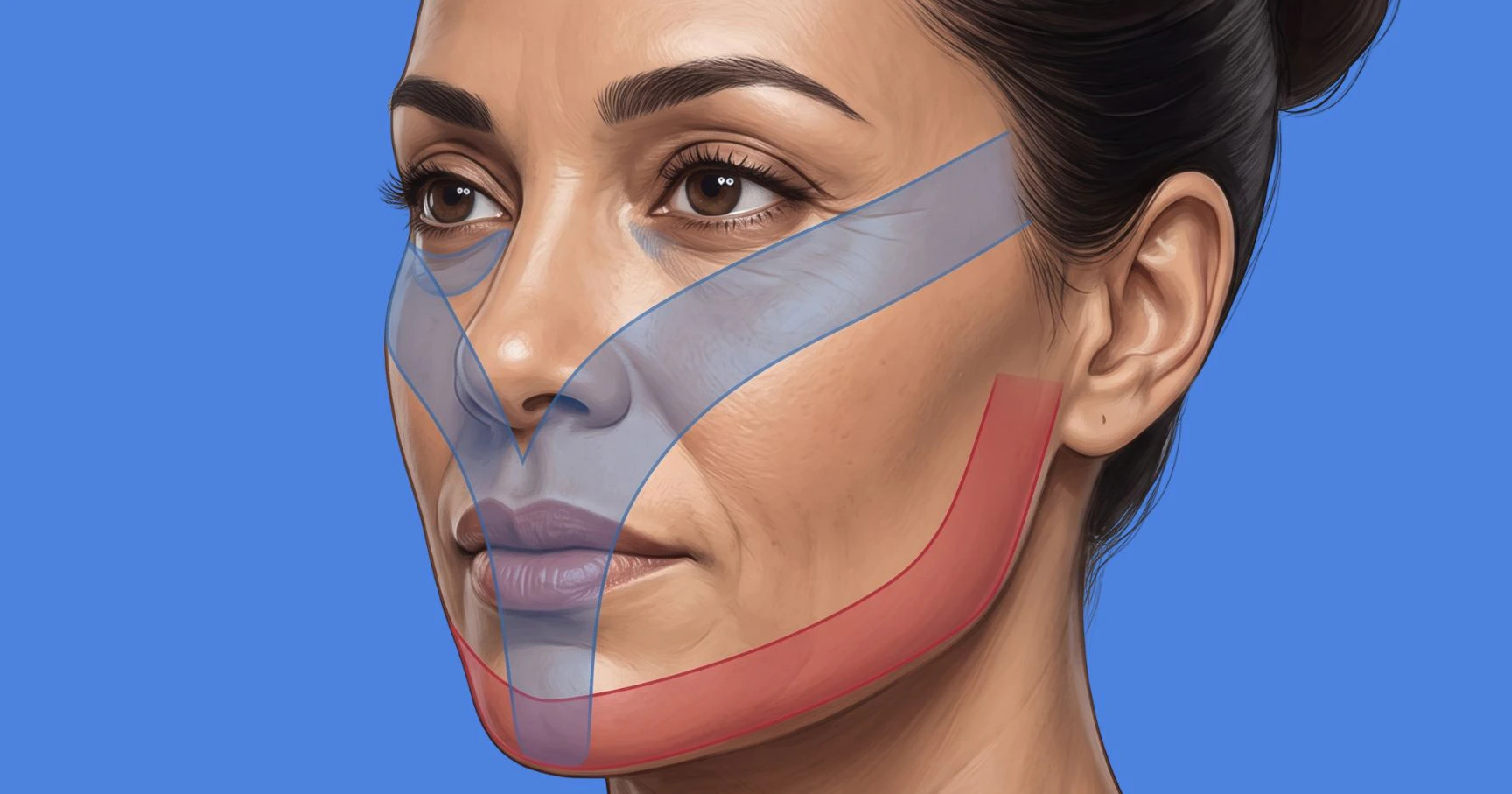
A Y-zone filler treatment, often called a Y-Lift, is becoming one of the most talked-about multi-area treatments in aesthetics. It uses strategically placed dermal filler to restore the youthful "Y" region of the face from the tear troughs to the chin.
But how do you know if a Y-Lift is something you should be offering your patients? Is it safe and are you ready? This guide explains exactly where the Y-zone sits, what a Y-Lift involves, and why the procedure has recently made headlines.
We'll also cover:
- Which patients are suitable for Y-zone filler
- Expected outcomes and longevity of results
- Y-Lift filler injection techniques
- How much experience aesthetic practitioners need before attempting this advanced aesthetic treatment.
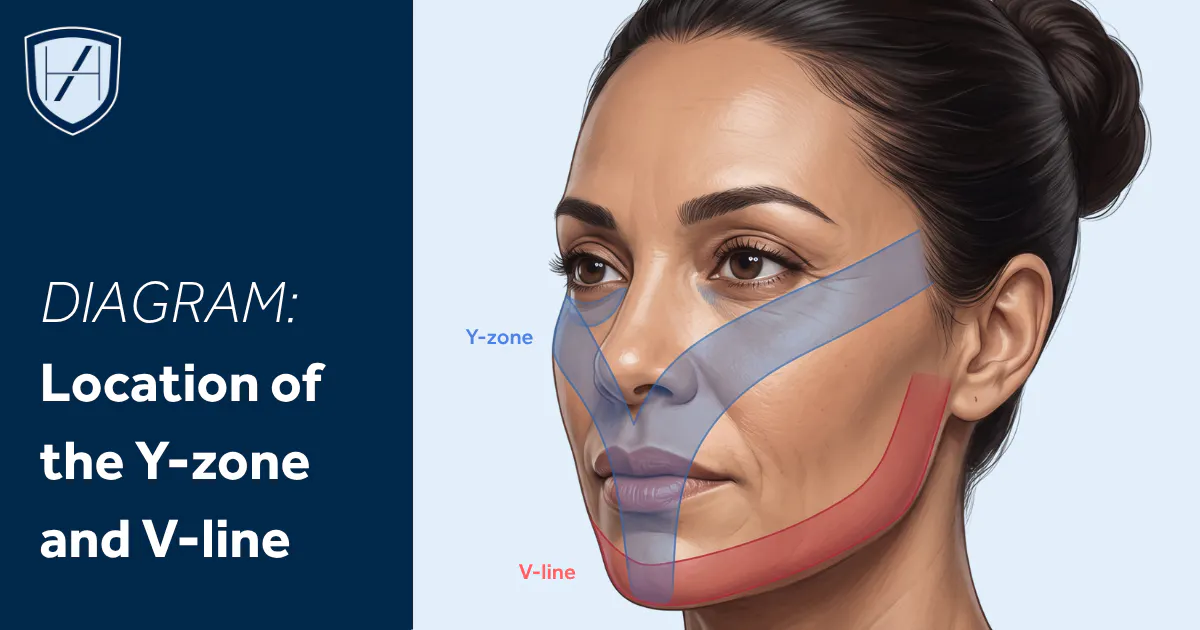
Where is the Y-zone?
The Y-zone refers to two overlapping "Y" shapes across the face. Understanding this anatomy is the starting point for any Y-Lift discussion.
The upper Y spans the eyes and cheekbones, running down through the midface towards the chin. This involves the zygomatic arch, the maxilla and the infraorbital region around the tear trough.
The lower Y spans the jawline, running from the mandibular angle down to the mentum, or chin point. This is also known, perhaps more accurately given the shape, as the V-line.
Both shapes narrow to a single point at the chin. In youthful faces, this creates a wide, structured upper face that tapers elegantly downward.
As we age, bone resorption and soft tissue descent cause these Y shapes to collapse inward. This can lead to hollow cheeks, jowls, a sagging jawline and a loss of facial harmony.
Key anatomical structures aesthetic practitioners must understand include the:
- Zygomatic arch and malar fat pads
- Maxilla and infraorbital rim
- Mandible, including the pre-jowl sulcus and gonial angle
- Mentum and labiomandibular fold
- Facial artery, angular artery and their branches.
Vascular awareness is essential here. Several of these zones sit close to major blood vessels, which is central to why the technique carries risk.
What is a Y-Lift?
A Y-Lift is a non-surgical facial contouring technique - a form of non-surgical facelift, that involves multi-area filler treatments. It typically uses hyaluronic acid-based fillers to rebuild the structural support the Y-zone loses with age.
It’s the signature treatment of cosmetic doctor Yan Trokel, MD, whose practice is based at New York’s Pierre Hotel, and who owns the trademark to the ‘Y-Lift’ name.
What results does a Y-Lift offer patients?
Rather than simply smoothing lines, a Y-Lift aims to restructure and give a “lifted” appearance. Filler is placed deep, often on or near the periosteum, to mimic lost bone volume.
This multi-area filler approach is designed to:
- Enhance cheekbone projection and definition
- Improve under-eye hollowing and tear trough shadows
- Sharpen and define the jawline
- Add structure to a receding or weak chin
- Lift the upper neck area subtly.
The result should look natural rather than "done". Many practitioners describe it as rebuilding the face's scaffolding, rather than just filling it.
Global Y-zone filler popularity
The technique originated in the United States, where Dr Trokel’s trademarked version uses specialised blunt cannulas. However, it has since become hugely popular across East Asia, particularly in South Korea.
Y-zone and V-line procedures are also reportedly in high demand from Chinese patients in South Korea.
In the UK and throughout Europe, this type of holistic, multi-area filler treatment is well established but is better known as a “Full Face Filler” treatment, though this is a less area-specific term. Whilst the “Y-Lift” is not yet trending with aesthetic practitioners or patients here, as with many Korean facial aesthetic trends, this is likely to pick up.
Which patients are suitable for a Y-Lift?
A Y-Lift tends to suit patients with early-to-moderate volume loss. Good candidates typically have enough skin elasticity to support the added structure.
Suitable patients for this type of advanced non-surgical facelift often include those who:
- Show early signs of midface flattening or jowling
- Want a non-surgical alternative to a facelift
- Have realistic expectations about subtlety and gradual change
- Are in good general health with no contraindications to filler.
Patients with significant skin laxity may need surgical options instead. As always, what’s realistically possible for each individual patient should be thoroughly explored and discussed during your clinical consultation. A detailed conversation and facial assessment should always precede treatment and, if you don’t believe this technique will achieve your patient’s desired goals, be honest with them.
Managing expectations carefully is an important part of consultations, especially for such an involved procedure. A Y-Lift enhances existing structure, but it can't replicate the results of a surgical facelift.
How long do Y-Lift filler results last?
Results from a Y-Lift are obviously not permanent, but they’re typically longer lasting than standalone filler treatments, as this type of “stacked” approach builds deeper support. Generally, you’re looking at results lasting between one and four years, though in reality this depends on a number of aspects.
Duration will depend on the filler product used, the location and depth of placement and individual patient factors. Metabolism, lifestyle and the specific injection technique all play a part.

Why is a Y-Lift controversial?
Despite its popularity, the Y-Lift has attracted controversy recently due to a tragic event in South Korea.
In July 2026, a Chinese woman in her thirties died after an illegal Y-zone filler procedure in Pyeongtaek, South Korea. She collapsed during treatment and was rushed to hospital, but did not survive.
An autopsy by Korea's National Forensic Service found the cause of death was pulmonary embolism. The injection had damaged a blood vessel, causing a clot that blocked a pulmonary artery.
Police investigations revealed the unauthorised procedure was carried out by an unlicensed non-medic who recruited clients via the Telegram app. He reportedly ran the operation from a massage parlour and attempted to destroy evidence afterwards.
Professor Yoo Sung-ho of Seoul National University's Department of Forensic Medicine explained the medical risk clearly. He told SBS News, "Because blood clots can eventually travel to the lungs or brain, the risk of death becomes very high. The Ministry of Food and Drug Safety and medical authorities in many developed countries warn that injecting fillers in these areas is extremely dangerous."
This procedure was not carried out by an appropriately trained medic, nor was it a true Y-Lift as it was not associated with the treatment’s creator.
However, this case underlines a wider point for the aesthetics industry. The Y-zone contains a dense network of blood vessels, and incorrect injection can cause serious, sometimes fatal, complications. This is why a detailed knowledge of facial anatomy and evidence-based filler injection techniques are critical for enhancing your patient safety.
Known risks associated with Y-zone filler treatments include:
- Vascular occlusion from accidental intra-arterial injection
- Embolism, where filler or a clot travels to the lungs or brain
- Tissue necrosis if blood supply is compromised
- Infection, particularly where products or environments are unregulated
- Poor aesthetic outcomes from incorrect depth or placement.
The South Korean case involved an unlicensed practitioner using unregulated methods. It's a stark reminder that Y-zone treatments must only ever be performed by trained medical professionals.
Regulation varies considerably around the world, and this inconsistency fuels risk. Patients sometimes travel abroad or use unlicensed providers to save money, often without realising the danger.
In the UK, non-surgical cosmetic treatments still sit in a largely unregulated space. Choosing a JCCP-approved aesthetics training provider helps healthcare professionals to become cosmetic clinicians who uphold consistently high safety standards. Harley Academy is proud to have been the first postgraduate aesthetic medicine training school to have gained this prestigious acknowledgement, which we still hold to this day.
Clear consent conversations matter enormously, too. Patients need to understand the specific risks of Y-zone treatments before they can provide informed consent.
What filler injection techniques are used in the Y-zone?
A Y-Lift relies on precise, layered injection techniques rather than simple point injections. Skilled practitioners combine several approaches to build structure safely.
Common techniques include:
- Cannula-based injections, using a blunt-tipped tool to reduce vascular trauma
- Deep bolus placement close to the periosteum for structural support
- Linear threading along the cheekbone and jawline for definition
- Fanning techniques to distribute volume evenly across the midface
- Micro-droplet layering for subtle contouring near delicate areas.
Cannulas are generally preferred over needles in higher-risk zones as their blunt tip is less likely to pierce a blood vessel during insertion. However, cannulas don't eliminate risk entirely. Practitioners still need thorough anatomical knowledge and a clear understanding of vascular pathways before injecting.
Aspiration, slow injection speed and small volumes per pass are all considered best practice. These steps help reduce the chance of vascular complications during treatment.
Product selection matters just as much as technique. Firmer, higher G-prime fillers tend to suit structural support, while softer gels work better for finer contouring.
Aesthetic practitioners should also plan their entry and exit points carefully. Mapping the vascular anatomy beforehand reduces the chance of an unexpected complication mid-treatment.
Explore the Global Evidence Matrix for up-to-date techniques
Every facial filler injection technique is covered individually in our Global Evidence Matrix (GEM©) framework, which can be found at HarleyAcademy.ai.
This helpful digital resource clearly sets out every step of each procedure, from patient, product and tool selection to injection depth, anatomical target and techniques, guided by the latest research.
The information is also classified by practitioner experience level, so you can ensure you’re practising within your scope, whilst also seeing what you may want to move on to as you complete more cases and build confidence.
You can join HarleyAcademy.ai free of charge, however, a Harley Pro subscription is required to access the full GEM© course and injection technique library. A 12-month subscription is included with all Harley Academy Diploma-level aesthetics training courses, including our Level 7 Diploma in Cosmetic Injectables, Fast Track Level 7 and our International Advanced Aesthetics Diploma.
How much experience should practitioners have before attempting Y-zone filler treatments?
Y-zone filler is not for complete beginners as it requires competence and confidence in a number of areas.
We'd generally recommend the following before progressing to Y-zone work:
- Completion of recognised foundation training in botox and dermal fillers
- Solid hands-on experience with straightforward filler treatments, such as cheeks and nasolabial folds
- A strong grasp of facial vascular anatomy and danger zones
- Formal aesthetics training specifically in combining filler treatments and treatment planning for multi-area approaches
- Confidence in preventing and managing filler complications, including vascular occlusion.
Bear in mind that techniques, products and safety guidance in this specialty evolve constantly, so you should never stop learning.
At Harley Academy, our postgraduate aesthetics courses follow data-driven principles as set out in the Global Evidence Matrix, detailed above. This means you’re always learning and practising at the cutting edge of aesthetic medicine.
Aesthetics courses for beginners, such as our Foundation Training in Medical Aesthetics, build the essential groundwork healthcare professionals need to get started. From there, clinicians can progress towards more detailed learning, for example, via postgraduate diploma-level aesthetic medicine qualification pathways.
Final thoughts
The Y-Lift can deliver impressive, natural-looking results when completed correctly by a trained and appropriately experienced aesthetic medicine professional. But, as the recent South Korean case tragically shows, Y-zone filler risks are real and serious.
For UK healthcare professionals considering medical aesthetics training, thorough education is the foundation of safe, ethical and effective practice. One that’s grounded in a deep understanding of theory and facial anatomy.
Whether you're exploring your first aesthetics course for beginners or wanting to develop a more detailed understanding of core injectable techniques, proper training matters more than ever. Patient safety must always come first.
If you're considering a career in aesthetic medicine or want to expand your existing skillset in cosmetic injectables, we're here to help. Book a call with our Courses team for personalised advice on taking the next step in your medical career.
All information correct at time of publication
Download our full prospectus
Browse all our injectables, dermal fillers and cosmetic dermatology courses in one document
By submitting this form, you agree to receive marketing about our products, events, promotions and exclusive content. Consent is not a condition of purchase, and no purchase is necessary. Message frequency varies. View our Privacy Policy and Terms & Conditions
Attend our FREE open evening
If you're not sure which course is right for you, let us help
Join us online or in-person at our free open evening to learn more
Our Partners











STAY INFORMED
Sign up to receive industry news, careers advice, special offers and information on Harley Academy courses and services