

What is Subcision for Dermal Fillers? A Guide to Subcising
Harley Academy Founder, Dr Tristan Mehta explains the use of subcision for dermal fillers in aesthetic medicine.
If you’re a regular viewer of our GEM© Clinic video case study series on YouTube, you may be familiar with subcision. But how much do you know about this technique?
Subcision before dermal fillers is an advanced technique used in medical aesthetics. It's not something you'll encounter at the start of your career. But it's important to understand, especially as you progress into more complex facial treatments.
We spoke to Dr Tristan Mehta to answer aesthetic practitioners’ frequently asked questions on the subject, including:
- What is subcision?
- When is subcision used in medical aesthetics?
- Do you use a needle or a cannula when subcising?
- What are the risks to be aware of with this technique?
- Who is subcision suitable for?
If you're considering aesthetics training as a healthcare professional, understanding procedures like this helps you see how deep the learning goes. There’s a lot more to medical aesthetics than just injecting filler!
Read on to learn more about subcising before filler treatments for more natural-looking aesthetic outcomes. Plus, scroll to the end to watch a live video featuring Dr Tristan subcising then administering a midface filler treatment in line with the Global Evidence Matrix framework.
What Is Subcision?
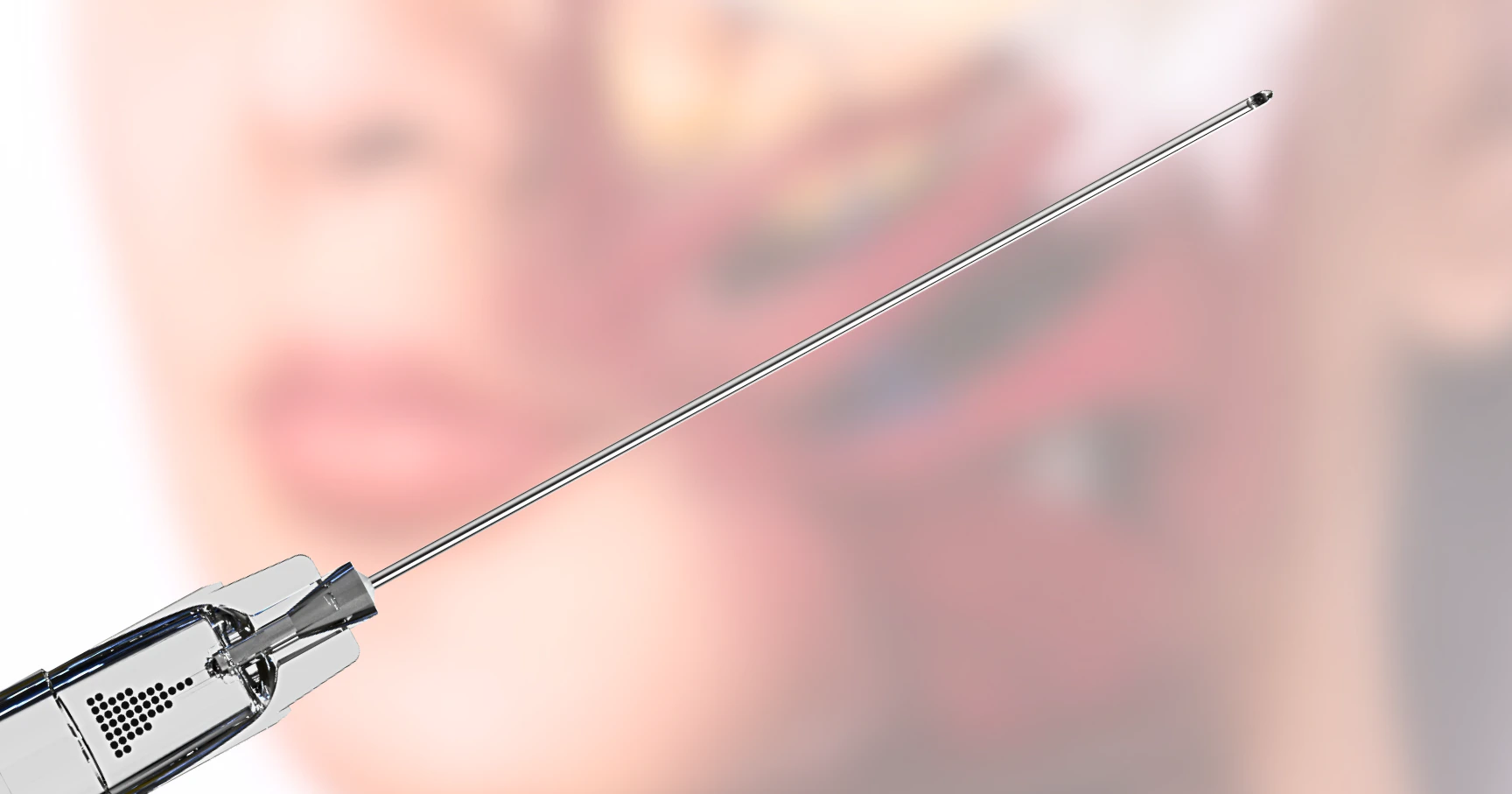
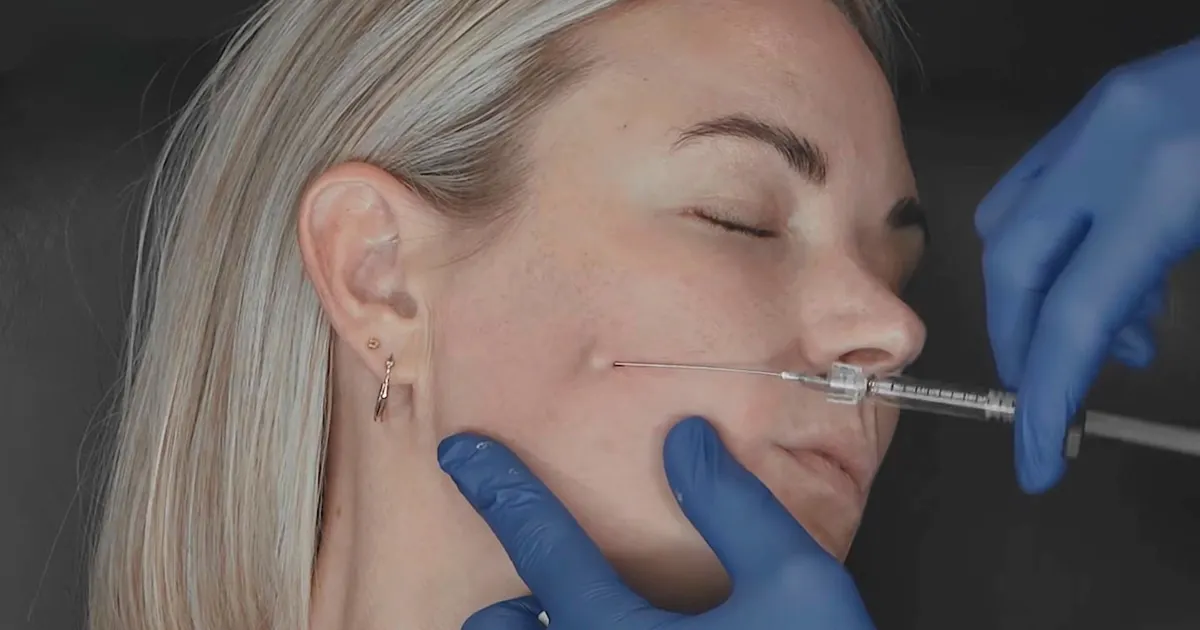
Subcision is a technique performed beneath the surface of the skin. It's carried out using a cannula in the subcutaneous or subdermal plane.
Dr Tristan tells us:
"Subcision is something that you do with a cannula in the subcutaneous or subdermal plane. You do this to release the insertions into the skin from underneath."
These insertions can take several forms. Understanding each one is key to knowing when and where subcision is appropriate.
"Those insertions can either be little fibrous divisions of the subcutaneous fat layer,” he explains. “They can be muscular insertions into the skin, for example in the neck, or they can be insertions from ligaments, for example in the midface with the mid-cheek groove."
In short, subcision targets the structures that tether the skin downwards. The goal is to release that tethering so the skin sits more naturally.
"The idea with subcision is that you're using a blunt cannula to detach these attachments from the underlying dermis."
At Harley Academy, we generally use TSK cannulas, and either TSK or SoftFil micro cannulas for our GEM© Clinics, which you can watch an extract from below. You may be interested to hear that our students are entitled to 20% off their first order from the TSK webstore, as part of our Trainee Benefits offers.
Where Is Subcision Most Commonly Used?
The Midface and Mid-Cheek Groove
The midface is where subcision is most often indicated before dermal fillers. This area has a well-known anatomical structure that can cause visible grooves.
"The most characteristic place that we see this is the midface where you've got the strong zygomatic cutaneous ligament attaching into the skin, which can cause this mid-cheek groove. So sometimes subcision can be used to reduce that attachment."
The zygomatic cutaneous ligament is one of the strongest retaining ligaments in the face. When it pulls tightly on the overlying skin, it can create a visible depression. Simply adding filler without addressing that attachment can produce an unnatural result, especially upon animation.
This is the key reason subcision before dermal fillers is considered in the midface. You're trying to release the tissue before adding volume to give your patients the most natural-looking results.
Acne Scarring
Subcision isn't exclusive to dermal filler work. It also has a role in treating certain types of acne scarring.
"Generally this is done with a cannula, but when someone has bad acne scarring you can also use subcision to release the skin from the underlying scarring. This can help to reduce the depth of specific types of scars, such as a tethered boxcar scar."
Boxcar scars have a defined, punched-out appearance. They're caused by tissue loss and the formation of fibrous strands beneath the skin. Subcision can disrupt those strands and allow the base of the scar to rise.
This is more relevant to dermatology than to typical aesthetic practice, but it's worth knowing if you're building a broad skillset in holistic treatments.

Why Subcision Matters for Filler Outcomes
Without subcision, adding filler to a tethered area may only worsen the appearance. You can end up with volume on one side of a groove and a sharp transition on the other. But what happens if a filler patient decides not to keep those treatments up?
Dr Tristan explains, "Subcision doesn’t impact patients who do not keep up their filler treatments in subcised areas. With subcision, you're generally trying to reduce the attachments so that when a patient does have volume added, it doesn't create this disconnect. There’s no obvious line or groove in the skin."
This is an important point for patient communication as it’s a question you’re likely to be asked. Whilst subcision is most effective when paired with ongoing filler treatment, it shouldn’t have visual impacts for those who don’t.
The Risks of Subcision
Bruising and Bleeding
It’s vital that aesthetic practitioners understand subcision carries a meaningful risk of bruising. This is partly because of where the ligaments sit in relation to the blood vessels.
"Often the blood vessels are running in line with the ligaments,” notes Dr Tristan. “So if you do a lot of subcision along a ligament line you can cause a bruise."
The unpredictable nature of this risk makes good technique and patient communication essential.
He continues, "It's hard to predict whether this can happen so we need to be quite careful with our subcision. But at the same time we also need to be quite vigorous with the cannula, moving backwards and forwards through multiple passes to divide and release those attachments going into the skin."
This balance is a real challenge as you need to be thorough enough to be effective, but measured enough to limit trauma. It takes experience to judge this correctly!
Lymphatic damage and malar oedema
Some patients aren't suitable for subcision at all. This is where patient selection becomes critical.
Dr Tristan stresses, "Subcision is not for beginners. You have to have a good understanding of depth and cannula control, of managing the patient selection and consent process. For example, if someone is prone to malar oedema or puffiness, you don't want to be subcising in that kind of area where you could also damage lymphatics and worsen lymphatic stasis."
Malar oedema is puffiness in the lower eyelid and cheek area. It's often linked to poor lymphatic drainage. Subcision in this zone risks making that significantly worse and is a risk that a less experienced aesthetic practitioner might not identify during consultation.
Trauma from inexperience
Dr Tristan’s bluntest warning about subcision is also the clearest.
"The other big risk is bleeding and bruising, and causing trauma when you're not experienced or qualified to be causing facial trauma through subcision. Essentially, subcision is more of an advanced approach with limited use cases for dermal filler, and also for certain types of acne scarring in dermatology."
This sums up it up well; Subcision is a niche, advanced aesthetics skill. It's not something to approach without proper training, supervision and experience.
What This Means for Your Aesthetics Training
If you're a healthcare professional considering medical aesthetics training, subcision is a useful lens through which to view the specialty. It illustrates how much anatomy, technique and clinical judgement our field demands.
Even treatments that appear straightforward, such as adding filler to a cheek groove, can involve multiple layers of complexity. Ligament anatomy, tissue tethering, lymphatic drainage and bruise risk all come into play.
The best aesthetics training for healthcare professionals won’t just teach you how to inject. It’ll build the clinical reasoning you need to understand why you're injecting, where, and in what order. Procedures including subcision sit at the top of that learning curve.
What an aesthetics course should cover before subcision
Before learning subcision, an aesthetic practitioner must have solid competency in:
- Facial anatomy, including ligamentous structures and vascular landmarks
- Cannula technique across multiple facial zones
- Patient assessment and selection for advanced treatments
- Complication recognition and management
- Consent processes for higher-risk procedures.
Subcision isn't a standalone skill. It's built on a foundation of everything that comes before it.
Who is subcision suitable for?
Subcision before dermal fillers is most appropriate for patients with:
- Visible mid-cheek grooves caused by ligament tethering
- No history of malar oedema or lymphatic problems
- A clear understanding of the bruising risk
- Boxcar acne scars, in an appropriate dermatological setting.
It's not suitable for beginners, and it's not a routine add-on to filler treatment. But, used correctly, in the right cases, it can significantly improve an outcome.
Watch the video above to see subcision in action. It’s taken from the Harley Academy YouTube GEM© Clinic series of Full Face Filler live case studies.
From the 13 minute, 16 second point, you can observe Dr Tristan Mehta demonstrating midface subcision techniques before treating his filler patient. Listen in as he narrates each step of the process and shares clinical insights, to help you deepen your understanding of this approach.
The techniques used are taken from the Global Evidence Matrix (GEM© ), which is a data-driven framework outlining the most up-to-date information on how to safely and effectively administer filler treatments. This allows aesthetic practitioners the peace of mind of knowing they’re following the science with every choice, from product and patient selection to injection technique and the anatomical target.
The full GEM© framework and associated course can be accessed via a Harley Pro subscription to HarleyAcademy.ai. It’s worth noting that a 12-month subscription is included when you purchase any of our Diploma-level aesthetics courses, including the Level 7 and our International Advanced Aesthetics Diploma.
Taking the Next Step in Medical Aesthetics
Medical aesthetics is a specialty that rewards careful, structured learning. There's a right order to develop your skills. Subcision sits near the top of the advanced tier.
Whether you're a doctor, dentist, nurse, or clinical pharmacist, the route into cosmetic medicine should involve proper accredited aesthetics training. Strong clinical oversight matters throughout.
A structured aesthetics course, such as our JCCP-approved and Ofqual-regulated Level 7 Diploma in Cosmetic Injectables, will help you build anatomy knowledge, injection skills and the clinical judgement aesthetic procedures demand.
If you're ready to explore your options, book a call with our aesthetics courses team for personalised advice on taking the next step in your medical career.
All information correct at time of publication
Download our full prospectus
Browse all our injectables, dermal fillers and cosmetic dermatology courses in one document
By submitting this form, you agree to receive marketing about our products, events, promotions and exclusive content. Consent is not a condition of purchase, and no purchase is necessary. Message frequency varies. View our Privacy Policy and Terms & Conditions
Attend our FREE open evening
If you're not sure which course is right for you, let us help
Join us online or in-person at our free open evening to learn more
Our Partners

















STAY INFORMED
Sign up to receive industry news, careers advice, special offers and information on Harley Academy courses and services