

What Does it Mean to be a Certified vs Qualified Aesthetic Practitioner?
Do you know the difference between being a certified versus a qualified aesthetic practitioner?
It essentially relates to the type of aesthetics training you undertake. There are two key pathways when it comes to aesthetic medicine courses - one is to gain certification, the other is to gain a qualification.
Whilst it’s a subtle distinction, it’s an important one that can make your services more valuable to prospective patients.
Each type has its own merits though, so let’s get into the details…
What’s the difference between a certified and qualified aesthetic practitioner?
In short, a certified aesthetic practitioner has completed a shorter injectables course that awarded them with a certificate. A qualified aesthetics practitioner has undertaken a significantly longer, regulated botox and filler course that provides them with an official qualification upon successful completion.
Almost every medical aesthetics practitioner will start out as certified. Many now also choose to become qualified, too.
You can start out as a certified practitioner and become a qualified injector at a later date. This simply requires you to upgrade your certified status by taking a regulated aesthetics course that awards an official qualification.
Which is better, a certified or qualified aesthetic practitioner?
A qualified aesthetic practitioner has undertaken more detailed, injectables training with more theoretical and practical training. Their knowledge has been tested through exams and cases, the marking of which is also independently verified by an Ofqual-registered regulatory body.
NEW RESEARCH PREVIEW: Over 90% of aesthetics patients expect their injector to hold a postgraduate qualification in injectables
Harley Academy has been involved in conducting new research into what patients look for in an aesthetic practitioner. Provisional survey data suggests that an overwhelming majority want their injector to have a medical background and have achieved a certain level of aesthetics education.
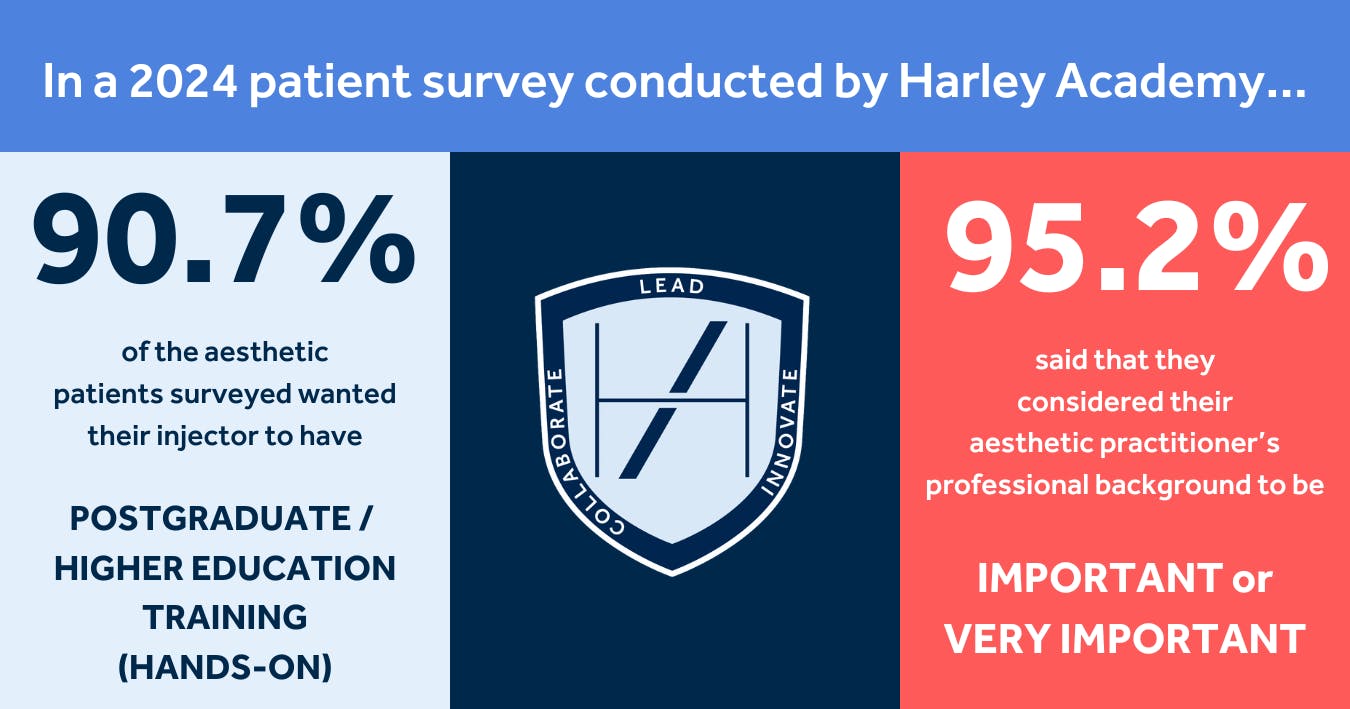
For example, when asked how important the professional background of their aesthetic treatment provider was, 69.3% of 410 respondents answered “Very important”. A further 25.9% said “Important”. That's a total of 95.2%.
In response to what level of education they wanted their injector to hold, 90.7% advised they looked for “Postgraduate / Higher education training (hands-on)”.
We’ll be publishing the full research results shortly but, for now, we can tell you that the landscape does seem to favour healthcare professionals with a Level 7 Diploma in injectables or a postgraduate degree in aesthetic medicine.
Pros and cons to each aesthetics training pathway
As a certified injector has completed significantly less training, the ‘better’- or more desirable - status is to be qualified. However, there are pros and cons to each pathway.
Here we explore each option for a well-rounded view of your options as a healthcare professional looking to get into medical aesthetics.
What is a certified aesthetic practitioner?
A certified aesthetic practitioner has successfully completed a short medical aesthetics course that offers a certificate at the end. This is a certificate of attendance.
This is known as the certified aesthetics training pathway.
Certified aesthetics training
A certified aesthetics course:
- Generally takes 1-5 days - certainly no longer than 3 to 6 months - to complete
- Doesn’t involve any coursework, assessments or exams
- Has a lower price than regulated, qualification-based botox and filler courses
- Is signed off by an educator or academic
- Offers a certificate upon successful completion.
For example, The Aesthetics Accelerator course involves 2 days of practical training through bespoke mentoring, plus around 13.5 hours of online learning.
This provides healthcare professionals with certified aesthetic practitioner status once completed.
Pros and cons of taking a certified aesthetics course
Pros:
- Can be completed in a shorter amount of time to get you practising quicker
- Will cost less to get you started
- Best suited to those looking to start their own aesthetic practice
- Covers the fundamentals of cosmetic injectables, focused on botox and dermal fillers
- Provides the certificate you need to be able to obtain insurance to start practising
- A great way to learn more about aesthetic medicine and find out if it’s for you without committing to a longer, more expensive training programme
- Can be a useful stepping stone if you’re unsure about diving straight into a career in aesthetics. For example, if you take our certified Foundation Training in Medical Aesthetics, you then have the opportunity to upgrade to our Level 7 injectables course and gain a Diploma qualification
- Minimal travel to our London or Manchester campus required to complete your practical training elements if you’re looking to take one of our certified entry-level botox and filler courses (1-3 days), making it easier to fit in around your existing commitments.
Cons:
- Limited scope of learning - confined to the basics of cornerstone treatments
- Minimal mentored practical injecting experience
- You will need additional practice and, we recommend, training to increase your confidence in delivering treatments, especially dermal fillers
- Can be harder to find employment if you’re looking to work for an existing aesthetics clinic.
What is a qualified aesthetic practitioner?
In the UK, a qualified aesthetic practitioner has successfully completed an Ofqual-regulated aesthetics course. They will have a post-nominal title that references this achievement.
Taking a filler and botox course that provides a regulated aesthetics qualification is known as the ‘qualified pathway’.
How to obtain a regulated aesthetic medicine qualification
You can take a postgraduate qualification in aesthetic medicine via a university or a dedicated aesthetics training provider.
Our Level 7 Diploma in Cosmetic Injectables is a great example of an accredited course that will make you a qualified aesthetics practitioner. It’s also approved by the Joint Council for Cosmetic Practitioners (JCCP).
Harley Academy is also a JCCP-approved aesthetic medicine training school. We work with our awarding body, VTCT Skills to deliver the highest quality postgraduate injectables qualification. As specialists in this area of aesthetics education for over 10 years, we have more graduates than any other UK provider.
Our Level 7 Diploma in Cosmetic Injectables:
- Takes between 12-24 months to complete (a shorter Fast Track Level 7 course is available for those who are experienced certified aesthetics practitioners and meet our Recognition of Prior Learning criteria)
- Includes many hours of hands-on, personalised mentoring as you treat real botox and filler patients, taking them through the whole treatment cycle
- Comprises 175 hours of online learning which can be completed at your own pace
- Requires you to build and submit a casebook through your own practical injecting and observation of treatments carried out by our specialist clinical trainers during Observation Days
- Involves a number of assessments, including two practical Direct Observation of Practical Skills assessments (DOPS) - one for botox and one for filler
- Allows you to use the post-nominal title, PGDipAes (VTCT Skills), once you’ve been awarded your Diploma.
Pros and cons of taking a certified aesthetics course
Pros:
- In-depth aesthetic medicine with extensive personalised mentoring during which you’re encouraged to ask questions which our clinical trainers will happily answer
- Builds your confidence in running the entire treatment process from consultation and treatment planning to treatment and providing aftercare advice for a range of botox and soft tissue injectable treatments
- Self-paced with lots of online learning opportunities for those who wish to minimise travel to our Manchester or City of London training campuses
- Instils a solid understanding of facial anatomy, skin ageing and ethical practice
- Allows you the breathing space to go at your own pace and book your practical training at times that suit you, so you can fit it around your schedule
- Provides an internationally-respected, Ofqual-regulated Diploma qualification in aesthetic medicine
- A Level 7 in injectables is often required for cosmetic nurses wanting to take the V300 prescribing qualification
- Can be used as a marketing tool and ‘selling point’ to differentiate yourself from other aesthetic practitioners
- Allows plenty of opportunities for faculty and peer-to-peer networking
- Better employment prospects for those seeking aesthetic practitioner positions within leading aesthetics clinics.
Cons:
- Greater cost may be prohibitive for some, though payment plans are available
- Length of course requires a bigger time commitment
- Committing to such an in-depth experience before you know if you actually want to pursue aesthetic medicine as a specialty, whether full- or part-time
- Hands-on mentoring sessions take place at our flagship City of London location, Harley Academy London or at Harley Academy Manchester. Our Harley Academy London campus at Threadneedle Street is a 5 minute walk from Bank station, whilst Harley Academy Manchester is in an easily accessible Quay Street location. Whilst we have trainees from all over the UK - and the world - we understand that not everyone is able to travel to our aesthetics schools even though advance booking is available
- Higher initial outlay may take a few months to recoup once you start practising. However, you will receive your certification following completion of the Foundation Training element of your Level 7. This allows you to gain your professional insurance so you can start practising aesthetics whilst you continue to train for your Diploma qualification.
Which aesthetics training route is best for UK regulation?
Aesthetics regulation plans for UK-wide minimum standards for training and qualifications have not yet been announced. However, it has long been part of the conversation that governments would consider what qualifications and the standard of the training provider they were obtained from, when determining these standards.
Former long-standing JCCP Chair and patient safety, regulatory campaigner, Professor David Sines, CBE, has spoken at length on this. As someone deeply involved in these UK discussions, he - on behalf of the JCCP - and others have advocated for regulated qualifications from those aesthetics training providers who already have certain approvals, to be considered as potentially meeting - or almost meeting - required standards. These approvals include being JCCP-approved and any gap between these existing standards and the final, defined standard may result in a small 'top-up' being necessary.
Harley Academy is both a JCCP-approved postgraduate aesthetics training provider - the first to achieve this honour - and our Level 7 Diploma courses also have official JCCP approval.
Introducing an aesthetics licensing scheme is likely to push ahead at a greater speed in 2026, following Scotland's decisive moves at the start of the year. Due to UKIMA legislation, a mandatory minimum standard of education and qualification will be required for all aesthetic practitioners. We'll keep you updated on this via the Regulation section of our Articles, as news develops.
How to decide which pathway is best for you
If you’re a healthcare professional considering a potential career in aesthetic medicine, as you can see, you have options! There are a number of beginners aesthetics training courses available at Harley Academy, which are all based on the latest evidence to set you up for success.
Choosing the best botox and filler course for you
Our Courses team often advise that, if you’re not ready to do the Level 7 Diploma just yet, you’ve got a couple of options. The first thing one is do Foundation Training in Medical Aesthetics to dip your toe into the water. Just try it to see if the world of botox and filler treatments is for you. Or, if you know that aesthetic medicine is something you want to focus on, The Aesthetics Accelerator will give you a fantastic start with more practical sessions.
If you’re considering a part-time career in aesthetics, any of our courses will get you off to a good start. They often recommend the Level 7 Diploma in Cosmetic Injectables here. That’s because it’ll give you the most amount of knowledge and highest level of qualification. But the great thing about all of our aesthetics courses is that they’ll work around your schedule, even if you’re working full-time.
If you’re looking to make a full-time career from medical aesthetics, the course our team usually recommends is our Combined Level 7. This is our Level 7 Diploma in Cosmetic injectables, which gives you a postgraduate qualification, plus certification from our Cosmetic Dermatology Course. Put these two together and you’ll be able to treat your patients much more holistically and take your medical career even further! It also allows for more revenue streams and a broader patient appeal, although it's up to you when you add each of these new skills to your treatment menu.
Get more information
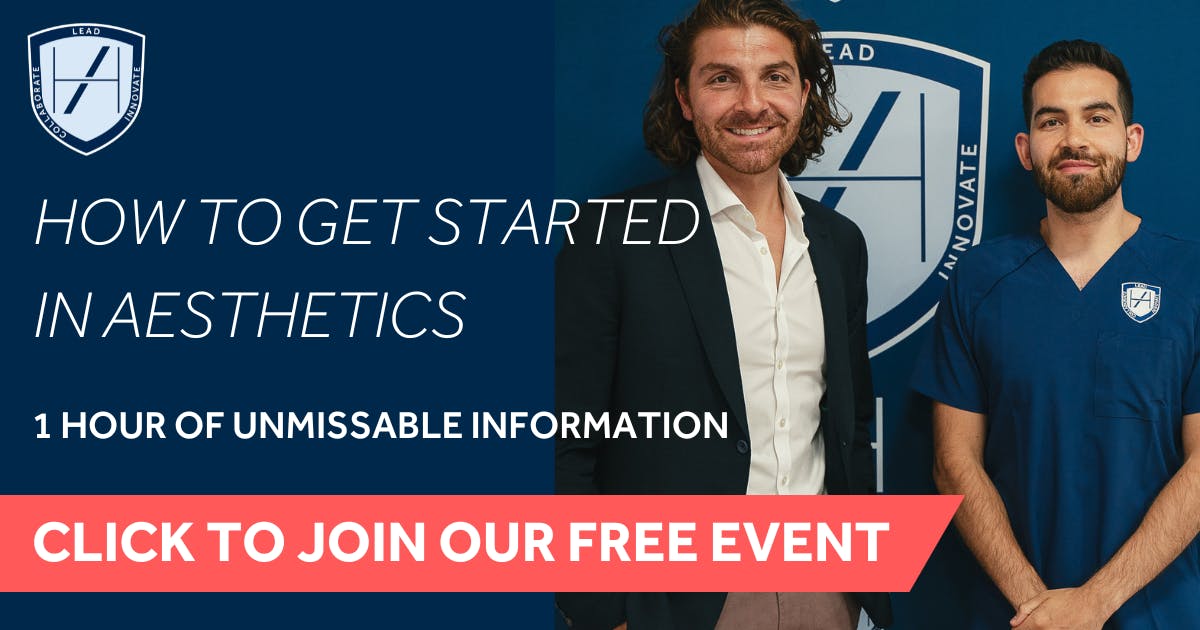
If you’d like to find out more about what we’ve discussed here, or about what it’s really like to work in medical aesthetics, lend us an hour of your time.
Our free How to Get Started in Aesthetics event can be accessed online and is hosted by one of our most senior faculty members.
It’s a full hour packed with unmissable information for healthcare professionals from healthcare professionals. From what aesthetic medicine actually is and the state of the industry in the UK, to where the opportunities are and how to access them. You’ll learn the answers to the most frequently asked questions, as well as any others you have for us and our panel!
Alternatively, you can get personalised advice by simply booking a call with our Course Advisors at a time that suits you. We’re here to help - without any hard sell - and look forward to hearing from you soon!
All information correct at the time of publication - updated February 2026
Download our full prospectus
Browse all our injectables, dermal fillers and cosmetic dermatology courses in one document
By submitting this form, you agree to receive marketing about our products, events, promotions and exclusive content. Consent is not a condition of purchase, and no purchase is necessary. Message frequency varies. View our Privacy Policy and Terms & Conditions
Attend our FREE open evening
If you're not sure which course is right for you, let us help
Join us online or in-person at our free open evening to learn more
Our Partners







STAY INFORMED
Sign up to receive industry news, careers advice, special offers and information on Harley Academy courses and services