

GEM© Clinic is Back: Evidence-Based Cheek Apex Filler Techniques
We’re excited to reveal the launch of GEM© Clinic Season 2! The latest in our video case study series, bringing the Global Evidence Matrix to life, features cheek apex filler techniques.
Dr Max Greenfield, cosmetic doctor and Harley Academy Head of Clinical Training, leads you through this new case, featuring Kathy, 45.
Her full treatment plan is exclusively available for annual Harley Pro subscribers to HarleyAcademy.ai to watch, as part of the GEM© video library. However, we’ve extracted one of these treatments - cheek apex filler - to share free of charge, and highlight our evidence-based approach.
In this article you can watch the live treatment video and find out more about cheek apex filler, including:
- Facial anatomy related to treating the cheek apex
- Avoiding complications in this area
- Needle or cannula and which filler product should be used here
- Cheek apex filler injection techniques and optimal injection depth.
Kathy’s GEM© Clinic full face filler case study
Kathy is a 45 year old patient who came to our GEM© Clinic looking for help with ageing–related concerns. Specifically, she worried about some lower face heaviness, lack of definition and wanted a “lift” to her midface region. She was also open to the beautifying and profile balancing effects of a subtle lip filler treatment.
After a full consultation and facial assessment with Dr Max, the following treatment plan was agreed upon and rolled out.
- Midface filler, addressing the cheek apex and lateral zygoma
- Treating the mandibular angle
- Chin filler
- Lip filler.
The full GEM© Clinic case study includes all these treatments, and is exclusively available to annual Harley Pro subscribers, alongside many other premium features, at HarleyAcademy.ai.
Why cheek apex filler for Kathy?
Upon assessment, Dr Max noticed that Kathy exhibited good volume in her upper face. However, there was some flattening along her cheek apex. This, combined with her lower face goals led to the pairing of midface treatments seen in her plan.
In this article, we’ll delve into her cheek apex filler treatment. As part of the structured, GEM©-informed approach of completing aesthetic treatments lateral-to-medial, superior-to-inferior, and deep-to-superficial, this was the first treatment of her plan.
Scroll down to watch the video of this part of her session.

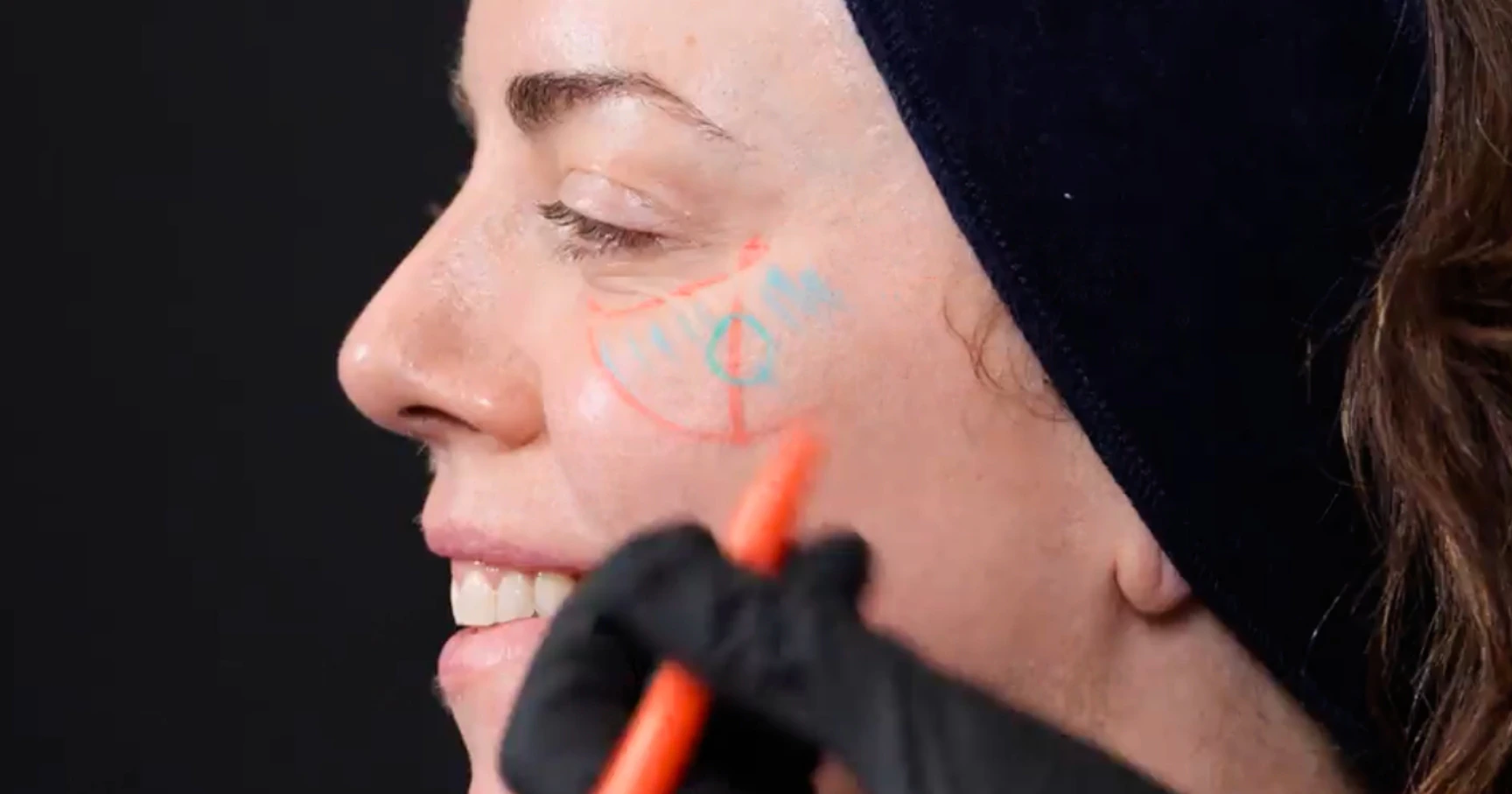
How do aesthetic practitioners locate the cheek apex?
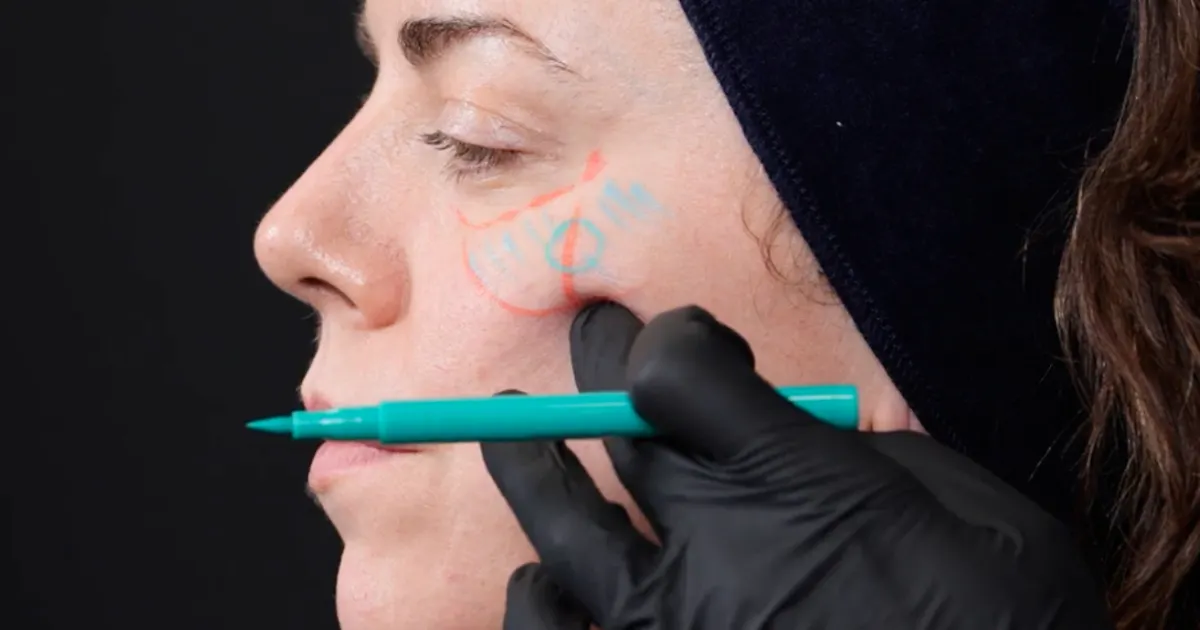
Dr Max explains how to locate the cheek apex, noting that, “the cheek apex is very much an aesthetic point but it aligns with true anatomy”.
In the video, you’ll see him landmark the orbicularis retaining ligament. “This attaches to the inferior orbital rim to form a fixed point and underneath this sits the zygomatic cutaneous ligament,” he explains.
Dr Max shares that, “sometimes we'll see that patients have a little bit of oedema that sits in this area here. And that's because it's getting trapped superficially between the zygomatic cutaneous ligament and the orbicularis retaining ligament.”
Continuing his instruction for finding the cheek apex, he says, “Deep to this, underneath the SMAS layer is our medial and lateral SOOF. We can generally divide our medial and lateral SOOF by finding the midpoint of the orbit between the medial and lateral, and drawing a line straight down. Our lateral SOOF is lateral to this line, and, typically, our cheek apex aligns with the meeting point between these two areas here.”
Highlighting the importance of assessing your patient from different angles, Dr Max concludes, “I can see, looking from the top and from the side, that is where I want that projection”.
Why did you choose a cannula for this cheek apex work?
Dr Max uses a 22G cannula from TSK Laboratory for this cheek apex filler treatment.
He advises, “We know that the larger the gauge of the cannula, the safer it is, the less likely it is to go into a blood vessel and cause a vascular adverse event. But at the same time, we want to find a balance between patient comfort as well, and 22 gauge seems to be the ‘goldilocks’.”
Which filler product works best for cheek apex projection?
When treating the apex of the cheek, you’re looking to provide projection. As the Global Evidence Matrix (GEM©) states, and Dr Max confirms, this requires a firm, high G prime filler product.
For Kathy’s midface filler, he uses Revanesse Shape noting that, because it contains local anaesthetic, it gets “progressively more comfortable” for the patient as he’s injecting.
What cheek filler injection technique do you use for the apex?
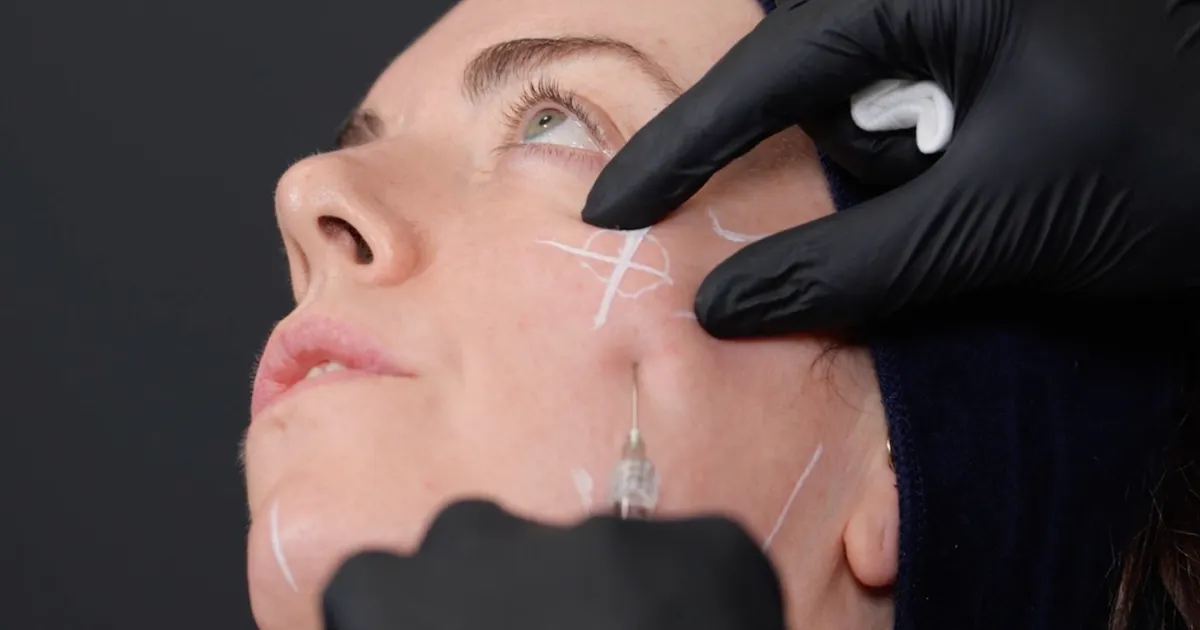
As you’ll hear him explain, the approach used in Kathy’s case study sees Dr Max fanning his cheek apex filler into layer four with a cannula. For this, he makes an entry point inferior to the apex of the cheek.
However, there are three ways you can treat this region following the Global Evidence Matrix framework, which he talks through in the video.
“The first is by doing a supraperiosteal bolus onto the cheek apex,” he says. “We can also come in with a cannula - which is what we're going to be doing today - underneath the SMAS”. “The third option is to come in, not just underneath the SMAS, but also into the preperiosteal fat, and that can give even deeper projection.”
Do you always inject in layer four for this treatment?
Whilst he’s injecting in layer four, under the SMAS, into the suborbicularis oculi fat (SOOF), Dr Max cautions aesthetic practitioners about injecting the preperiosteal fat.
“The only times I might think about injecting the preperiosteal fat is if someone has got lots of malar oedma in this area and I want the filler to be further away, or even deeper from the superficial lymphatic drainage. Then I might go deeper,” he says. “But the SOOF is normally a nice way of adding that projection in. If you're too deep sometimes you need a bit more product to get that projection.”
What's the vascular anatomy around the cheek apex?
As an aesthetic practitioner, understanding the intricate vascular anatomy of the midface is crucial for patient safety and achieving optimal outcomes.
Dr Max has already highlighted how the cheek apex itself is an aesthetic feature, distinct from the anatomical zygomatic prominence, though they can overlap. The apex is primarily supported by the SOOF, which is the anatomical target into which he deposits Kathy’s treatment.
When considering the cheek apex, it’s vital to also be aware of the broader midface as this contains several important arteries and veins. These are the:
- Infraorbital neurovascular bundle
- Facial artery and vein
- Subdermal arterial network.
Infraorbital neurovascular bundle
This bundle emerges from the infraorbital foramen and contains the infraorbital artery, vein, and nerve. This area is considered particularly vulnerable, and bounds the deep medial cheek. As such, deep medial cheek filler treatments, which are adjacent to the cheek apex, require careful consideration.
How do you avoid complications when treating the cheek apex?
Avoiding complications as an aesthetic practitioner typically involves six factors:
- Knowing your anatomy
- Ensuring appropriate patient selection
- Following the evidence, from product and tool choice to your injection technique
- Reviewing your work afterwards and if there are any concerns, monitor as needed
- Having up-to-date complications protocols to hand, printed out, not just online
- Completing regular complications drills to ensure you’re familiar with these protocols, where to find the relevant supplies, etc.
Good quality postgraduate medical aesthetics training should prepare you for most of these steps. Research and tools such as GEM© on HarleyAcademy.ai can keep you abreast of evidence-based injection techniques for every area of the face and anatomical considerations, as well as the optimal tool and product selections. However, keeping your protocol records current and accessible, plus running regular drills, are steps every aesthetic practitioner should take responsibility for.
When it comes to the cheek apex specifically, correctly locating your landmark, injecting in the right plane, plus using an appropriate cannula and filler product, are key. Maintaining an awareness of the relevant facial anatomy and injection depth will also help clinicians to avoid complications from this midface filler treatment.
What aesthetics courses can help medics to improve their cheek filler technique?
Harley Academy offers a range of award-winning, accredited postgraduate aesthetics courses for medics looking to improve their cheek filler technique. We've listed some below but our helpful Courses Team is always on hand to provide personalised advice, if you'd like to chat through your options.
Aesthetics courses for beginners
For healthcare professionals who are absolute beginners and looking to get started in aesthetic medicine, the best way to learn cheek filler treatments is via one of our entry level courses.
Foundation Training in Medical Aesthetics will provide you with extensive pre-course eLearning, including cheek filler treatments. Once you’ve completed this theory element, you’ll then come into clinic, at our London or Manchester aesthetics training academies, for a recap of your eLearning and to get hands-on. You’ll learn to inject mannequins with soft tissue injectables - botox and dermal filler - before lunch, then move on to treating your very first patient under the supportive guidance of our dedicated mentors.
For those who are novices but want more practical aesthetics training, the Aesthetics Accelerator course is a good option. This includes all of our Foundation Training, plus additional online resources and more mentored injecting practice at our UK academies.
Both of these courses are certified, and form part of our offering as the first postgraduate aesthetics training academy to be JCCP-approved. They’re intended as an introduction to the specialty, to establish the core principles upon which clinicians can start their careers whilst continuing to learn and grow their confidence and competency.
Injectables Masterclasses for intermediate and advanced aesthetic practitioners
If you’re a more experienced aesthetic practitioner looking to upgrade your midface filler techniques, our Facial Contouring Masterclass is worth exploring.
This inspiring day-long clinical session teaches you how to sculpt the midface and lower face through evidence-based multi-area treatment plans to deliver the natural-looking outcomes patients want. From profile balancing to combining different areas and modalities, you’ll enjoy bespoke pre-course eLearning, before a full day at Harley Academy London, where you’ll treat real patients and put these new techniques into action, with our mentors’ support.
Our Injectables Masterclasses are frequently used by experienced injectors who want a regular skills refresh. Not only do you benefit from the certified course learning provided, and instruction from our knowledgeable faculty. You also get to network and share insights with peers in purposely small groups for an enhanced educational experience.
We hope you enjoy this first extract from GEM© Clinic Season 2, and can’t wait for you to watch the full case which is now live for annual Harley Pro subscribers, on HarleyAcademy.ai.
All information correct at time of publication
Download our full prospectus
Browse all our injectables, dermal fillers and cosmetic dermatology courses in one document
By submitting this form, you agree to receive marketing about our products, events, promotions and exclusive content. Consent is not a condition of purchase, and no purchase is necessary. Message frequency varies. View our Privacy Policy and Terms & Conditions
Attend our FREE open evening
If you're not sure which course is right for you, let us help
Join us online or in-person at our free open evening to learn more
Our Partners














STAY INFORMED
Sign up to receive industry news, careers advice, special offers and information on Harley Academy courses and services