

Can Anyone Call Themselves an Aesthetic Nurse in the UK?
Right now, the answer is yes. Anyone in the UK can call themselves a nurse or aesthetic nurse. This includes non-medics with no clinical training whatsoever. It even includes individuals struck off by the Nursing and Midwifery Council (NMC).
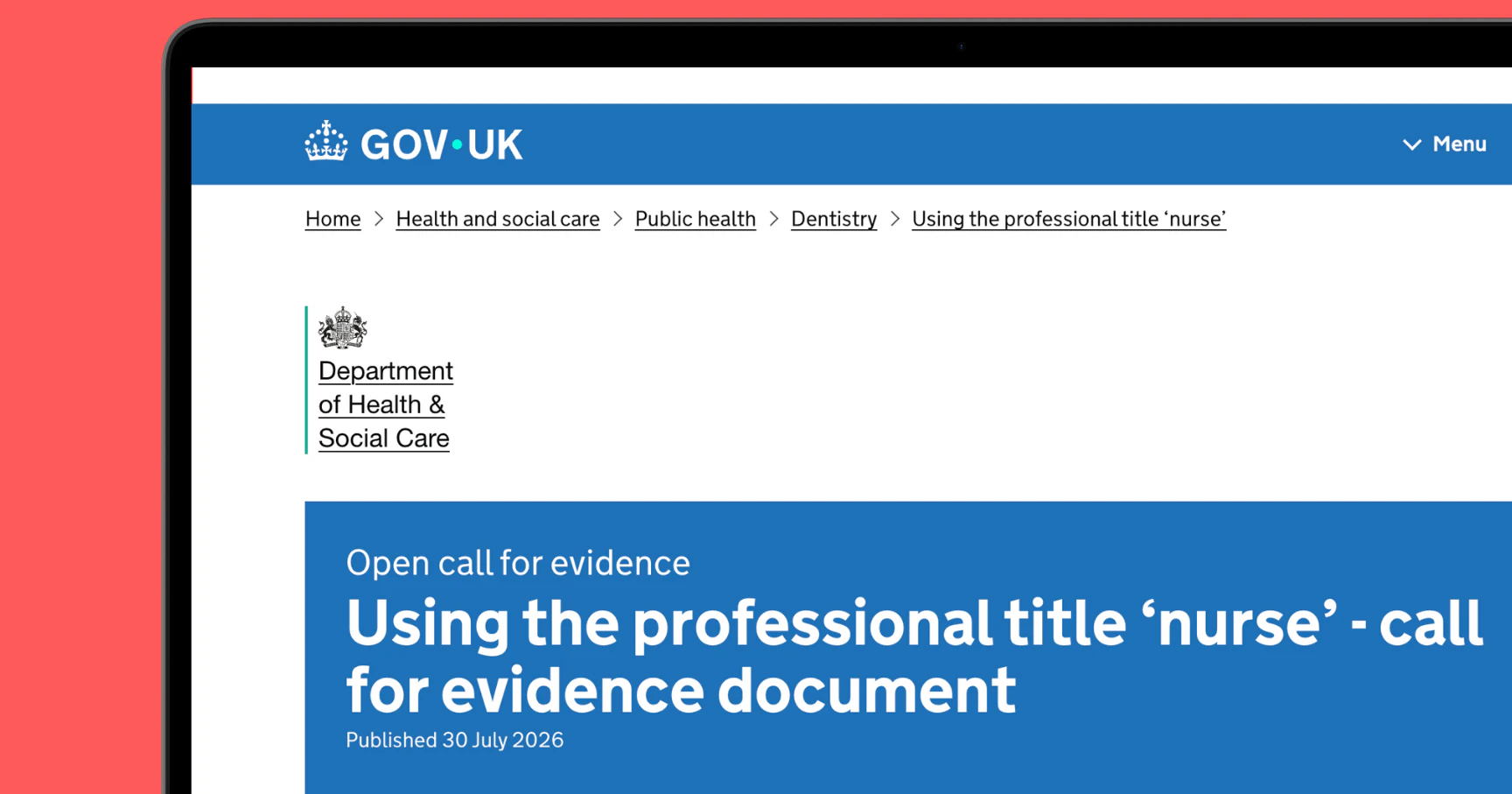
This legal gap has huge ramifications for both the reputation of genuine cosmetic nurses and for patient safety. The government has launched a call for evidence on protecting the title 'nurse'. It closes at 11.59pm on 8 October 2026 and aesthetic nurses have good reason to pay close attention here.
This article breaks down the current legal position on the title of ‘nurse’ in plain terms. We'll compare this to protections already in place for doctors and dentists, too, as this comparison reveals some surprising gaps in UK healthcare law.
It also explains why this consultation matters specifically for aesthetic nurses and how to lodge your feedback.
This is important information for all nurses and midwives, but for those undertaking or exploring aesthetics training courses, the context matters. Regulation is tightening across the sector, and title protection is part of that shift.
So, let’s get into the issues around who can legally call themselves a nurse in the UK, and how this applies to aesthetic practitioners…
Is the Title 'Nurse' Currently Protected by Law in the UK?
No, the job title of ‘nurse’ is not fully protected by UK law at this time. Titles like 'registered nurse' carry legal weight through NMC registration, but the standalone word 'nurse' isn't protected at all.
The following nursing titles are currently protected in law and regulated by the NMC:
- Registered nurse
- Midwife
- Specialist community public health nurse
- Nursing associate (England only).
Practically, this means several things.
- Individuals do not need a nursing qualification to call themselves a ‘nurse’
- A person removed from the NMC register can still call themselves a nurse
- Patients have no legal guarantee that a 'nurse' is actually registered
- Practitioners can advertise themselves as a ‘nurse’ without any regulatory issues.
In the UK, qualified nurses train for years before registering with the NMC. They then need to complete revalidation every three years to maintain that registration.
None of this applies to a non-medic simply deciding to use the title and call themselves a nurse. It’s an extraordinarily confusing situation for patients, and not something many people seem to be aware of.
What is the Government's Nurse Title Consultation?
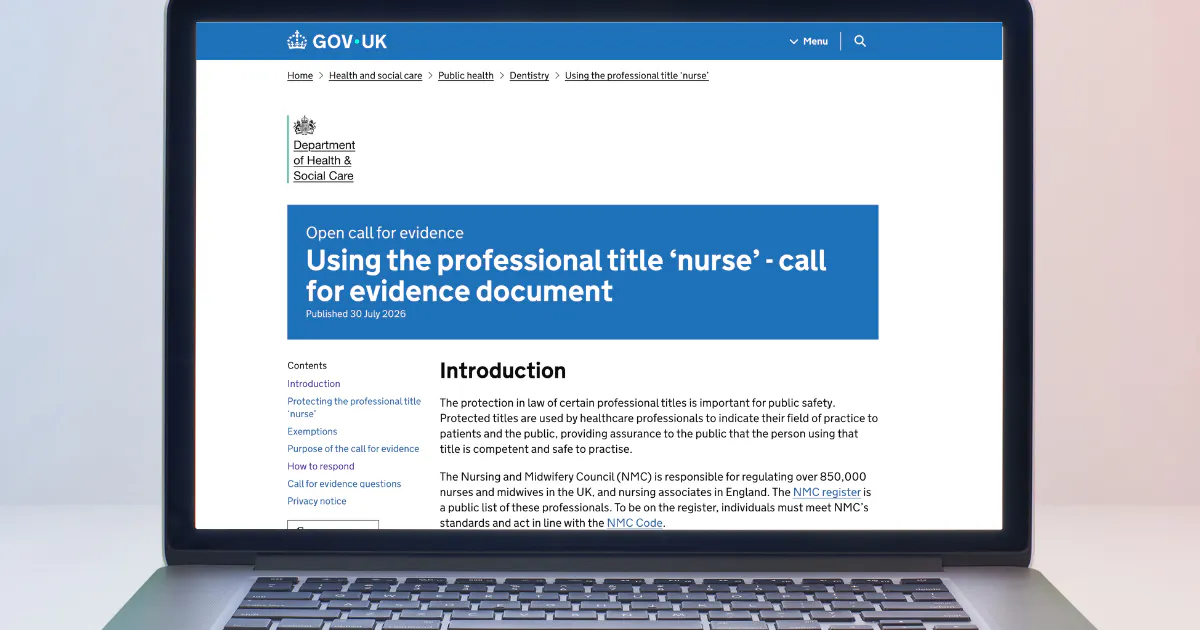
The Department of Health and Social Care published a call for evidence on 30 July 2026, which builds on an announcement made in May 2025. That International Nurses Day announcement first confirmed plans to protect the word 'nurse' in law.
What questions is it trying to answer?
Two central questions sit at the heart of this Nurse Title consultation.
- Which roles should still be allowed to use 'nurse' without risk of prosecution?
- What other titles should gain protection under the NMC's legislative framework?
The government has invited views from a wide range of stakeholders. These include the public, the Royal College of Nursing and various employers. Regulators, trade unions, charities and the higher education sector are also included.
What about job titles such as a ‘nursery nurse’?
Certain roles are likely to remain exempt from new restrictions. Commonly cited examples include:
- Veterinary nurse
- Dental nurse
- Nursery nurse.
It’s often argued as part of this debate that these examples don't imply NMC registration, so should be carved out of any new legislation.
Is this a UK-wide issue, or does it only affect England?
This applies across the whole UK, not just England. The NMC's regulatory framework covers England, Scotland, Wales and Northern Ireland equally. Because of this, the consultation specifically asks for input from all four nations.
Job titles involving the word 'nurse' can differ slightly by nation. The government wants to understand these variations before drafting new rules. Getting this wrong in one nation could create confusion or unintended loopholes elsewhere.
If you’re a nurse practising anywhere in the UK, this consultation is relevant to you directly.
Why is This Particularly Important for Aesthetic Nurses?
Non-surgical cosmetic treatments remain largely unregulated across the UK. People with no medical background can currently offer dermal fillers and other aesthetic procedures. Some describe themselves as nurses purely to appear more trustworthy to patients.
Patients naturally assume a 'nurse' is a properly trained medical professional. Many would also expect that they are registered with the NMC. Without title protection, that assumption isn't always true, which directly increases the risk of complications and patient harm.
How does the lack of ‘nurse’ title protection affect genuine aesthetic nurses?
For cosmetic nurse practitioners, who are genuine medical professionals, the most pressing downside of this situation is the attack on their reputation.
Qualified aesthetic nurses often complete extensive medical aesthetics training beyond their nursing degree, such as the Level 7 Diploma in Cosmetic Injectables. That investment builds genuine clinical competence and professional credibility over time.
When unqualified individuals use the same title, that credibility gets undermined. Patients struggle to distinguish real expertise from confident marketing. Every misuse of the title chips away at collective professional trust, potentially making patients more wary of aesthetic nurses, as opposed to, for example, cosmetic doctors or dentists.
Anecdotally, many patients have reported preferring to see a nurse for their aesthetic treatments, as they see nurses as being more caring and empathetic.
Protecting the word 'nurse' would restore a clear, reliable signal for patients. It would also properly recognise the medical training genuine nurses have completed. Whilst this is true of every specialty, it’s particularly necessary in aesthetic medicine due to the lack of regulation.
Why Should Aesthetic Nurses Respond to This Consultation?
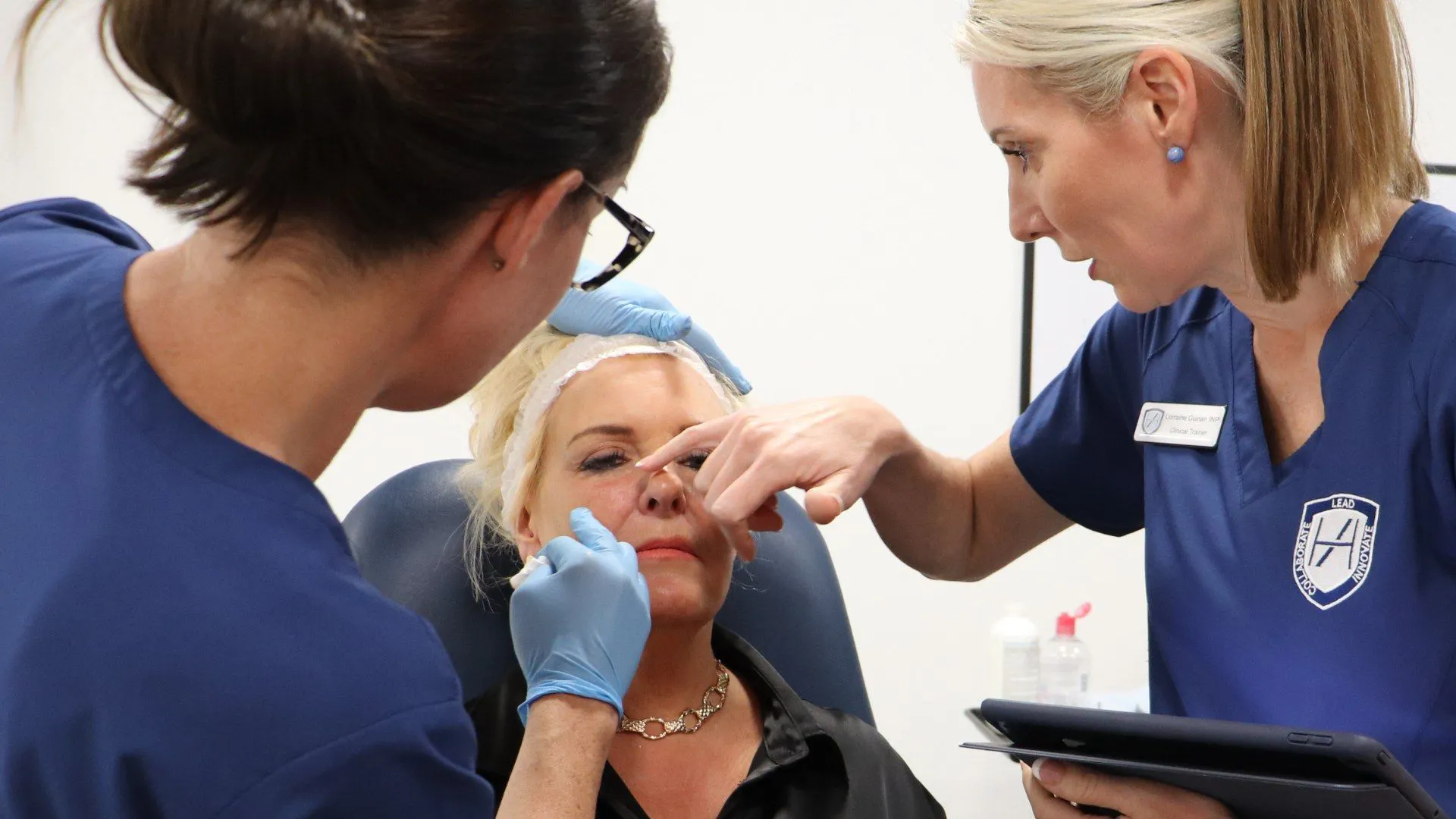
Cosmetic nurses see the practical impact of this gap. You've likely encountered aesthetic practitioners calling themselves a “cosmetic nurse” without the proper qualifications. That first-hand experience is exactly what this consultation needs, so speaking up gives the government real evidence to work from.
Detailed, specific responses tend to carry more weight than general comments, though you’re welcome to provide your concerns and feedback outside of specific examples, too.
How do you submit a response and what’s the deadline?
You need to submit your response via the Department of Health & Social Care’s dedicated webpage before the deadline: 11.59pm on 8 October 2026.
The process is simple, just follow these steps:
- Visit the official call for evidence webpage
- Read the full call for evidence document beforehand
- Submit your response through the DHSC's online consultation portal
- Include real examples from your own professional experience where possible
Does 'doctor' have the same legal protection in the UK?
Not quite, and this often surprises people. The Medical Act 1983 protects a specific list of titles. These include physician, general practitioner, surgeon and doctor of medicine.
Notably, the word 'doctor' alone isn't on that protected list. Only certain compound titles carry legal restriction under this Act.
Because 'surgeon' is protected, only GMC-registered doctors may use it. However, registration alone doesn't guarantee specialist surgical training. In theory, a GP could legally call themselves a "cosmetic surgeon" but they wouldn't need dedicated surgical training to do so lawfully.
This is currently a major concern in the UK aesthetics industry, where doctors with no surgical training have been found to be carrying out invasive cosmetic procedures, such as breast augmentations and liposuction. The government received a letter from concerned bodies and surgeons outlining the extent of the issue on 11th August 2026. Signatories included Professor Sir Bruce Keogh, and representatives from the JCCP, the Royal College of Surgeons of England, and the British Association of Aesthetic Plastic Surgeons.
This issue, and the need to close this loophole, with all doctors sticking to their scope of practice, which should be reflected in their job title, was also raised in a recent government committee hearing on aesthetic regulation.
Outside clinical settings, things loosen further still. Someone holding a PhD can also legitimately use 'doctor' in academic life. This overlap creates genuine confusion for patients trying to check credentials.
Does 'dentist' have the same legal protection in the UK?
Yes, and considerably more so than 'doctor' does. The Dentists Act 1984 protects several dentistry-related titles directly. Section 39 makes misuse of these titles a criminal offence.
The following titles are protected under this legislation.
- Dentist
- Dental surgeon
- Dental practitioner
- Dental nurse
- Dental hygienist
- Dental technician
Anyone using these without General Dental Council registration breaks the law outright. This gives dentistry a clearer, stronger legal footing than medicine currently has.
It also demonstrates what's achievable through targeted legislation. If dentistry can secure this level of clarity, nursing has a strong case for similar treatment.
How Does This Help Aesthetics Regulation?
Aesthetics regulation is finally moving in several directions at once. Title protection sits alongside broader plans for licensing high-risk cosmetic procedures. Together, these changes point towards a more accountable, professionalised industry.
Through this open call for feedback, nurses can contribute to this change as legislation slowly improves patient safety from a number of angles.
Furthermore, for healthcare professionals entering this space, credible training matters more than ever. Solid, regulated aesthetics training for healthcare professionals sets a genuine professional standard. It also protects both your patients and your long-term medical career.
Selecting the right aesthetics course now puts you ahead of the curve. As standards rise, practitioners with proper medical aesthetics training for nurses will stand out clearly. Those relying on borrowed titles will find it increasingly difficult to compete.
If you're considering formalising your experience with a JCCP-approved qualification, or are considering becoming an aesthetic nurse, speak to our courses team for personalised advice on taking the next step.
All information correct at time of publication
Download our full prospectus
Browse all our injectables, dermal fillers and cosmetic dermatology courses in one document
By submitting this form, you agree to receive marketing about our products, events, promotions and exclusive content. Consent is not a condition of purchase, and no purchase is necessary. Message frequency varies. View our Privacy Policy and Terms & Conditions
Attend our FREE open evening
If you're not sure which course is right for you, let us help
Join us online or in-person at our free open evening to learn more
Our Partners














STAY INFORMED
Sign up to receive industry news, careers advice, special offers and information on Harley Academy courses and services