

Beat-Based Aesthetic Education for Aesthetic Practitioners
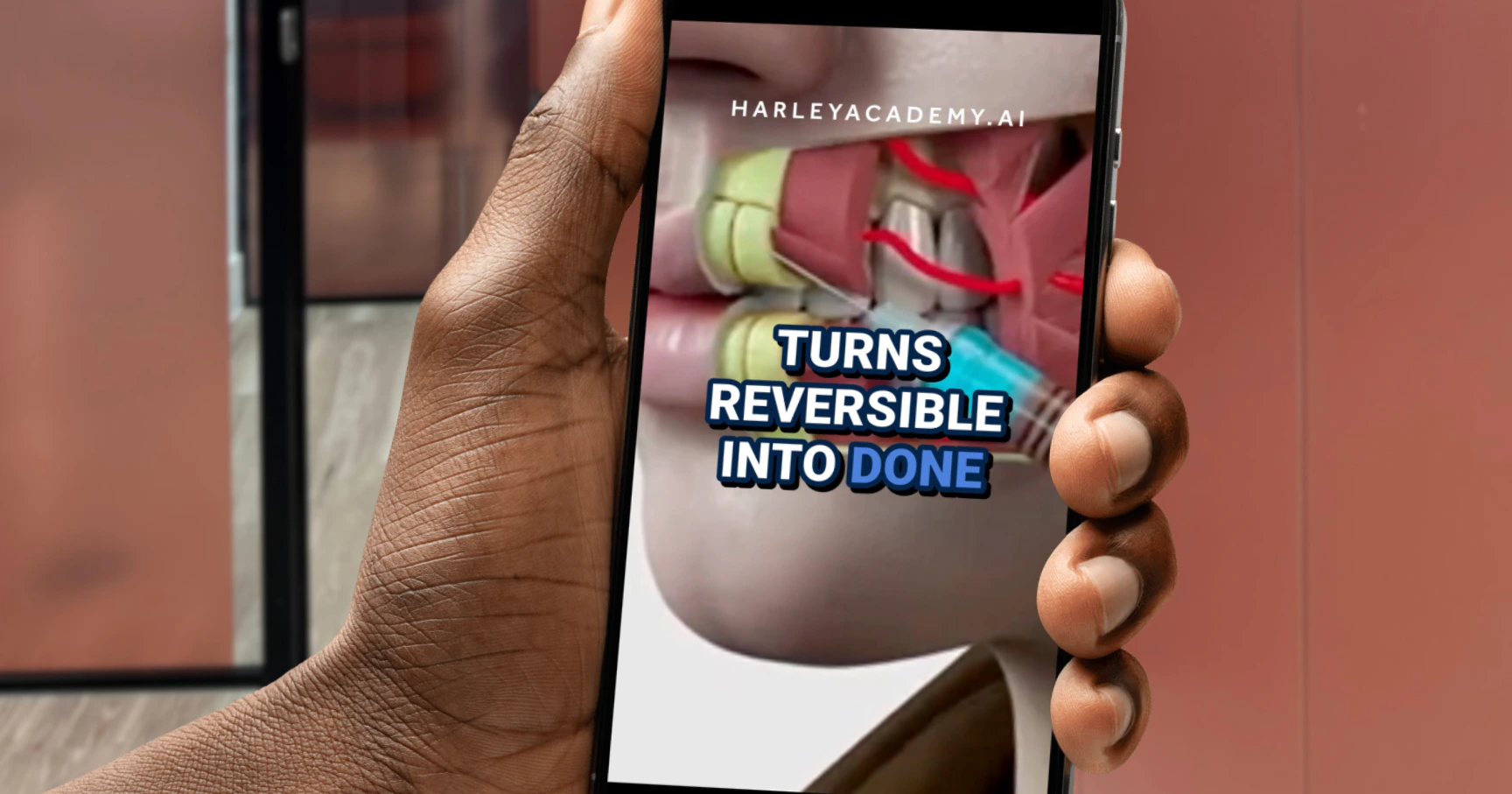
Is beat-based aesthetic education the future of learning in our sector? Harnessing research-backed learning science, it’s designed to improve aesthetic practitioners’ knowledge and comprehension of key topics.
Using songs to help you recall information is a proven learning strategy. Whilst the ABC song used to teach the alphabet is a famous example of this, it’s a technique that can also be applied to more advanced education.
Now, Harley Academy is sharing a song designed to help you remember core evidence-based information using exclusive, beat-based aesthetic education videos.This example has been put together to illustrate what’s possible and we’d love to hear your thoughts!
Our brains process listening to music differently to listening to plain speech, or reading. And the dopamine this delivers helps us to retain lyrics more effectively.
Think about it for a second. Which would you be able to recall more easily, if asked for an on-the-spot answer - the steps in a vascular occlusion management protocol, or the words to Wonderwall?
Read on to learn more about this innovative learning tool, plus our approach to medical aesthetics training for both our academies and the HarleyAcademy.ai learning system. Plus, scroll down to explore our first foray into beat-based aesthetic education.
Warning: this song will stick in your head (and it’s meant to)!
What is “beat-based aesthetic education”?
Beat-based education, or ‘musical mnemonic learning’, refers to the deliberate embedding of educational content into rhythmic or melodic structures. This could be songs, chants, jingles, or raps designed to encode information that must be retained and recalled.
Beat-based learning is distinct from simply playing background music while studying, as the messaging is carried by the beat and melody.
This has real-world implications for aesthetic medicine. A 2021 systematic review exploring the use of songs in CPR training found that practitioners who'd been taught using a musical beat showed improved performance when tested more than 30 days after initial training.
The longer the gap since learning, the more the musical format appeared to help. That's the kind of long-term recall advantage that matters most in clinical emergencies.
For aesthetic practitioners, the principle is the same. Vascular occlusion management, for example, involves a sequence of steps that must be recalled accurately and quickly, often in high-pressure situations when you haven’t needed to use them recently. Beat-based learning is particularly well-suited to this kind of sequential, protocol-based information.
It's worth noting that this format works best when you actively engage with the content rather than passively listening. Repetition also matters. The more times you listen, the more deeply it's encoded.
How does beat-based learning work?
The answer to how this works lies in how the brain processes and stores information.
Here comes the science bit to explain a little more about the thought process behind us exploring this novel learning technique.
Dual coding
When content is delivered through both speech and melody at the same time, the brain encodes it along multiple neural pathways simultaneously. This is known as “dual coding”. It significantly increases the likelihood of later retrieval, particularly under pressure.
The hippocampus, prefrontal cortex, and medio-temporal regions all become involved in storing the information more deeply than spoken content alone would achieve.
Dopamine and improved memory
Music also activates the brain's dopaminergic reward system. Research published in peer-reviewed neuroscience journals has shown a clear link between pleasurable music, dopamine release, and enhanced memory formation.
In simple terms, learning set to music feels good, and when learning feels good, the brain is more motivated to hold onto it.
Bilateral brain activation
Music engages both hemispheres of the brain, creating a more balanced distribution of cognitive effort. For medical aesthetics practitioners absorbing complex clinical information, that dual engagement can support better focus and more effective processing.
Enhanced focus and recall
Rhythm plays its own distinct role too. A regular beat provides a temporal scaffold, predicting when the next word or phrase will arrive. This reduces cognitive load and allows the brain to focus its attention on the content rather than the sequence. That predictability is part of what makes a song feel familiar so quickly, and why lyrics stay retrievable even under stress.
Research published in 1994 in the Journal of Experimental Psychology, found that text is better recalled when it's heard as a song rather than plain speech. The melody acts as a structural framework, chunking information into manageable units, identifying stress patterns, and tying phrases together so that recalling one part helps reconstruct the whole.
Increased brain function
Research into the brain and memory has also shown that exposure to music actively increases brain function in students. So what better way to enhance the theory side of your aesthetics training than by setting key messaging to music?
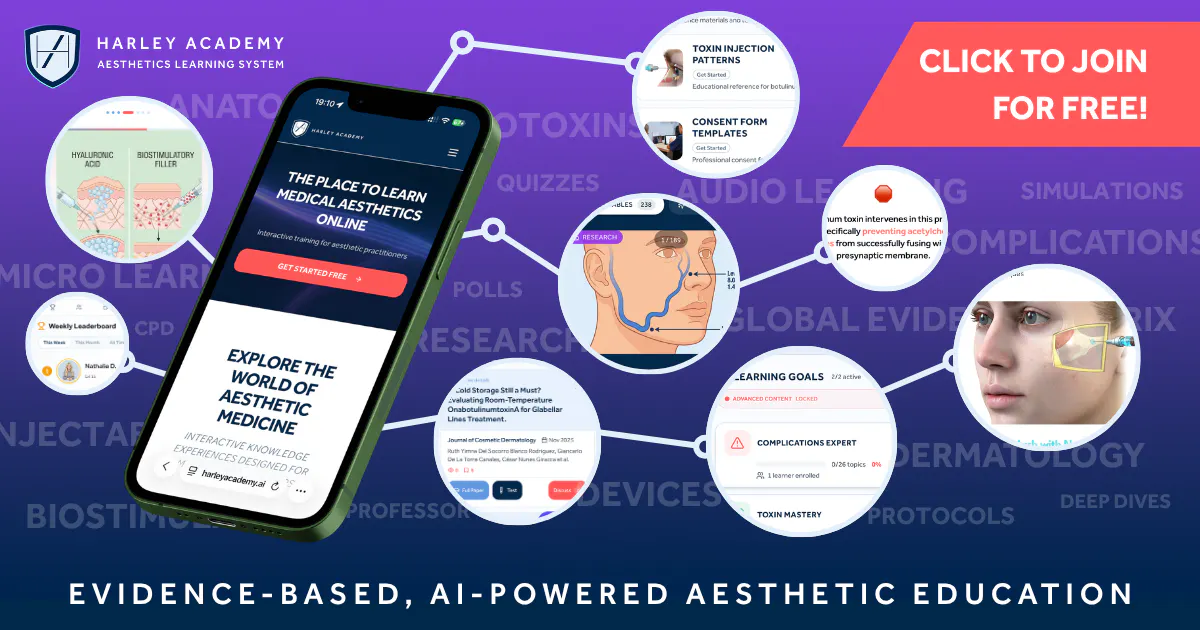
Join HarleyAcademy.ai for more free vascular occlusion protocol information for medical aesthetics professionals
Optimised aesthetic medicine learning at Harley Academy
At Harley Academy, we’re always reviewing and refining how we deliver high quality, evidence-based aesthetic education for healthcare professionals. And this doesn’t just refer to the science behind cosmetic injectables.
As leaders in this space for over 10 years, we also spend a lot of time exploring data related to how people learn and retain information. This allows us to ensure we’re constantly delivering appropriate information in the best possible formats that really resonate with our audience.
This approach applies to content for trainees at our Manchester and London aesthetics training schools, digital learners around the world taking our online aesthetics courses, and app users of HarleyAcademy.ai.
The latter also uses research into optimised information comprehension strategies from language learning app giant, Duolingo. And, as we continue to push the boundaries of what effective, evidence-driven learning can be in aesthetic medicine, we’re exploring beat-based aesthetic education as an adjunct, and would love to know if you’d find this type of resource helpful. We recommend listening at least three times so you can really take it in!
How do I access beat-based aesthetic education songs for medics?
Our trial of beat-based aesthetic education is part of our continued review of how people learn.
We spoke to Harley Academy Founder & CEO, Dr Tristan Mehta about the concept. A cosmetic doctor and educator of over 10 years, he’s also the original innovator of the Level 7 in aesthetic medicine qualification, plus the creator of GEM© - the Global Evidence Matrix - and HarleyAcademy.ai.
Dr Tristan says of this exciting new initiative, “One of the challenges in aesthetic medicine is that some of the most important information clinicians need to retain is also the information they use least frequently. Vascular occlusion management is a good example. Every aesthetic practitioner understands its importance, but under pressure, recall becomes a different challenge altogether.
“The idea behind this trial video was simple: can we use what we know about learning neuroscience to make critical clinical protocols and information more memorable? By combining evidence-based educational principles with music, rhythm and repetition, we're exploring new ways to improve knowledge retention and recall in a field where patient safety depends on both.”
Free access and raising standards in aesthetic medicine
Dr Tristan adds, “This vascular occlusion protocol video aims to show aesthetic practitioners what’s possible with beat-based educational content. Our goal is not to replace traditional aesthetics training, but to complement it with accessible, engaging microlearning resources that clinicians can revisit repeatedly throughout their careers. It's a test and we're looking forward to hearing how clinicians receive it.”
You can watch this sample video above or on the Harley Academy YouTube channel.
To learn more about preventing and managing a vascular event, create a free account at HarleyAcademy.ai and explore the ‘Complications Expert’ topic under ‘Learn’. You can also check out our ‘Complications Guidelines’ in the ‘Practice’ section, too.
We know this new style of learning won’t be for everyone, but we feel it’s important to explore different ways of ensuring all learners can recall important information quickly and accurately. Would this help you? We look forward to hearing your feedback after you’ve watched this example!
All information correct at time of publication
Research sources used in this article:
1. Wallace, W.T. (1994) - Memory for music: Effect of melody on recall of textMemory for music: Effect of melody on recall of text Journal of Experimental Psychology: Learning, Memory, and Cognition, 20(6), 1471–1485 DOI: 10.1037/0278-7393.20.6.1471 Full text via ResearchGate
2. Knott, D. & Thaut, M.H. (2018) - Musical Mnemonics Enhance Verbal Memory in Typically Developing Children Frontiers in Education, Vol. 3, Article 31 DOI: 10.3389/feduc.2018.00031
3. Pellegrino, J.L., Vance, J. & Asselin, N. (2021) - The Value of Songs for Teaching and Learning Cardiopulmonary Resuscitation (CPR) Competencies: A Systematic Review Cureus, 13(5): e15053 DOI: 10.7759/cureus.15053 Full open-access text (PubMed Central):
4. Ferreri, L. & Rodriguez-Fornells, A. (2017) - Music-related reward responses predict episodic memory performance Experimental Brain Research, 235(12), 3721–3731 DOI: 10.1007/s00221-017-5095-0
Download our full prospectus
Browse all our injectables, dermal fillers and cosmetic dermatology courses in one document
By submitting this form, you agree to receive marketing about our products, events, promotions and exclusive content. Consent is not a condition of purchase, and no purchase is necessary. Message frequency varies. View our Privacy Policy and Terms & Conditions
Attend our FREE open evening
If you're not sure which course is right for you, let us help
Join us online or in-person at our free open evening to learn more
Our Partners









STAY INFORMED
Sign up to receive industry news, careers advice, special offers and information on Harley Academy courses and services