

Are Dermal Fillers Over? A Cosmetic Doctor Explains ‘Filler Fatigue’

Demand for dermal fillers is slowing down, thanks to a phenomenon known as “filler fatigue”. But does this mean fillers are over? Not at all. We explore what aesthetic practitioners need to know about this trend, and how to provide the most effective, commercial treatment offerings.
We spoke to our Founder & CEO, Dr Tristan Mehta - a cosmetic doctor of over 10 years - for his insights into the downward filler trend.
He explains why he considers this a necessary recalibration, and why fillers will always have an important role to play in aesthetic practitioners’ toolkits. After all, there are certain concerns only fillers can address! They just have to be used appropriately and handled intelligently.
Read on to find out what’s driving this pattern, and how clinicians can prepare for the filler rebound.
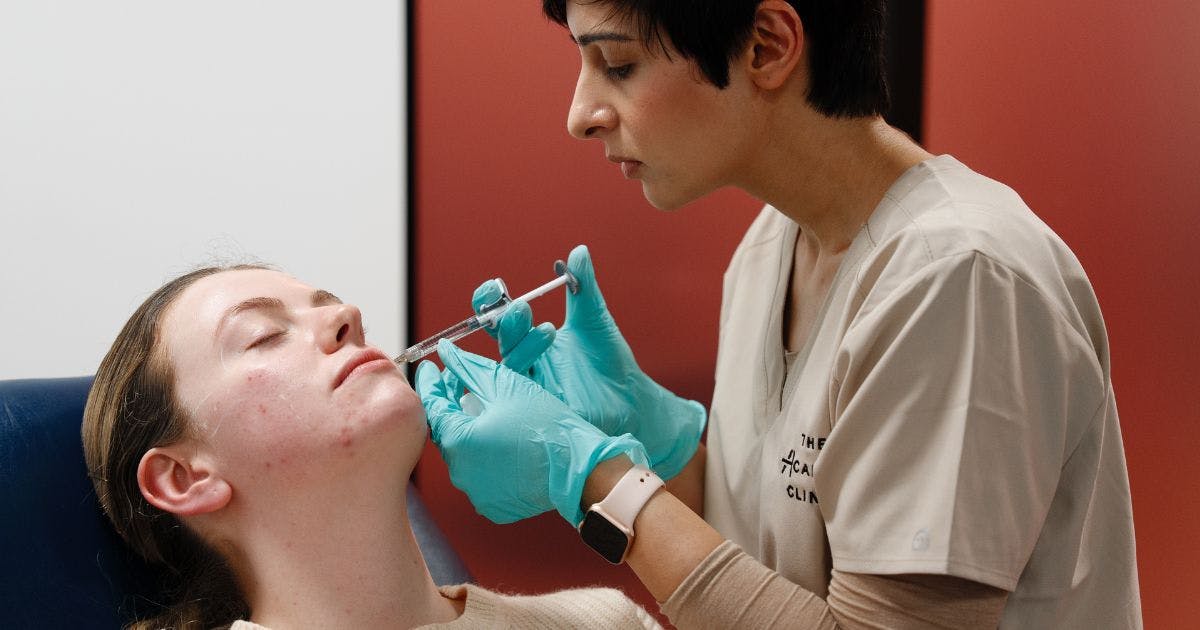
Filler demand is decreasing - which is a good thing
A frequently cited report - the Aesthetic Trends Report 2024 (AestheticsConference / RARE Group Consulting) - states that UK dermal filler treatments declined by ~31% in 2024.
Is this down to the concurrent rise in facelift demand, reported by BAAPS? Maybe in part. But this trend can be attributed to three more obvious reasons.
- A return to more subtle, natural-looking enhancements
- Broader choice of effective treatment offerings
- Better patient education and awareness of the different options.
“We hear a lot about how demand for fillers is down in the aesthetics market. This is something called ‘filler fatigue’.
“About five years ago, we were over-utilising fillers for everything. Whether the patients came with volume loss or looking for new structural features, or were looking to improve their skin quality. Whereas cross-linked fillers are actually really useful for deep structural volume and superficial surface contour.”
Larger filler volumes are not always better
“Fillers can’t treat everything,” he reminds us. “They can’t create significant collagenesis on their own or improve the skin condition on their own. Often, we’ve been over-filling patients by thinking that a larger volume is always better.”
This is definitely not the case, and it’s a lesson that’s been learned in real time, given how new this specialty still is.
Aesthetic patients are more informed and have more options
“I think we’ve learned a lot in the last few years,” shares Dr Tristan. “Patients have also become a lot more aware of thinking about improving their skin condition and the architecture of the face, before considering deep structural volume.
“We have a broader mix of treatments available now, including more regenerative options. Skin treatments and polynucleotides, for example. We’re also seeing a resurgence in biostimulator treatments. These are important for laying the foundations before we consider volumising the face.”
Many of us have noticed the shift towards patients seeking multi-area and multi-modal treatment plans.
At IMCAS 2025, Allergan Aesthetics research noted that ‘clinics utilising treatment plans addressing multiple areas of the face see a 68% higher retention rate compared to those that focus on one area per treatment’.
So, whilst filler demand may be down, this gap is being filled with alternative treatment options.
At The Academy Clinic in London and Manchester, we’ve seen steady growth in non-filler injectables, including Profhilo®, Profhilo® Structura and polynucleotides. In the past few months, whilst filler and botulinum toxin still top our patients’ treatment demand, these three soft tissue injectables have been growing exponentially.
Overall demand for cosmetic injectables is still growing
“The aesthetics market is still growing,” notes Dr Tristan. “Injectable treatments on the whole are still up, but the proportion of those that were filler treatments is now smaller. I believe that’s simply because the industry is wiser now.”
So what does he think about the future of filler demand? “Fillers will very much still have their place,” he confirms. “But when we come back to fillers, and fillers start to really take off again, we’ll be doing it in much more intelligent, appropriate ways. That really comes down to understanding the right products, understanding patient selection, and having a deep understanding of facial anatomy and the ageing process.
“All of this comes back to having a good understanding of what we’re doing in aesthetic medicine, and why we’re choosing the products that we choose.”
Aesthetic treatments to start your practice with
You’ll usually take dual filler and botulinum toxin courses, but most clinicians feel most comfortable with botox, initially. It’s a straightforward treatment to administer, as long as you have a solid understanding of the relevant anatomy and injection principles. What’s more, it offers high rates of patient satisfaction and there’s usually steady demand.
Although it’s easy to feel pressure to put all your new found knowledge into practice straight away - and it’s definitely worthwhile getting that experience - that’s not realistic for everyone. Offering one thing that you do really well is a great way to build your confidence before introducing other treatments. It also gives you the opportunity to grow your practice and gain valuable word-of-mouth recommendations from your happy patients.
Many successful aesthetic practices have been built by starting out solely offering upper face botox treatments. By offering review appointments, you’ll see your patients a couple of times every three to four months, allowing you to build a rapport.
When it comes to expanding your treatment menu, consider what you’re confident in delivering well as well as what your patients are looking for. And don’t just guess - ask them!
Consider non-filler soft tissue injectables known to have strong demand, such as:
- Profhilo®
- Polynucleotides
- Profhilo® Structura
- Skin boosters and mesotherapy.
Talk to your patients about these and assess the interest level. You can use our free treatment profit calculator tool to help you set your prices, easily.
Tailoring your treatment menu to your patient base
If you find most of your patients are in a more youthful, preventative cohort, consider treatments that target skin quality and collagen banking. Profhilo® and polynucleotides are great options here.
For an older set, whose concerns are less around beautification and more centred on rejuvenation, fillers will always have their place. Structura and skin treatments that target concerns relating to skin quality, laxity and pigmentation issues can be fantastic additions.
You may notice trends such as a number of patients coming to see you to address hollowing or sagging following weight loss, This concern often requires a multi-modal approach combining skin laxity improvements with restoring deep, structural support and definition. This is a great opportunity to combine fillers with the likes of Profhilo® Structura, and potentially skin quality treatments, for 360° results.
Additionally, skin treatments such as microneedling and chemical peels are fantastic offerings. They provide standalone or adjunctive care for treatment plans aimed at a range of concerns, from signs of ageing and skin quality, to acne and hyperpigmentation. You’ll also have options for patients looking for non-injectable treatments, broadening your prospective audience.

Adding cosmetic dermatology and skin injectables to your practice
If you’re looking to add more than toxin and filler treatments to your practice, you have a range of options at Harley Academy.
Beginners or novices who are looking to start their aesthetic education journey with a well-rounded holistic approach to practice should consider the Level 7+ course. This combines our Ofqual-regulated and JCCP-approved Level 7 Diploma, with our certified Cosmetic Dermatology Course.
The Level 7 Diploma in Cosmetic Injectables course includes detailed study of:
- Evidence-based aesthetic practice (theory eLearning and practical mentored injecting) of soft tissue injectables including filler and Botox, in line with Global Evidence Matrix principles
- Facial anatomy plus the science of facial and skin ageing
- Essential product rheology
- Consultation protocols, assessment skills and treatment planning
- Psychological drivers for patients considering cosmetic treatments
- Complications prevention and management
- Professionalism, ethics and law in aesthetic medicine
- Observed cases, as well as treating your own patients - provided by us - during supportive, personalised mentoring sessions.
Our Cosmetic Dermatology Course provides complementary knowledge - again, a blend of theory and practical - in:
- Skin anatomy, physiology, function, ageing and pathology
- The science and theory behind skin rejuvenation treatments
- Psychodermatology considerations
- Professional skin consultation skills including how to assess the skin for treatment and devise bespoke skincare & treatment plans, with and without a skin analysis device
- Safe microneedling techniques, including with mesotherapy additions
- How to build safe management plans for hyperpigmentation and darker skin tones
- Proper use of very superficial, superficial and medium-depth peels - AHA, BHA, Retinol and TCA
- Safe polynucleotides, mesotherapy and skin management plans
- Single skin treatments plus when and how to combine treatments
- Contraindications, potential complications and how to avoid them.
Each of these two programmes are available independently, as standalone aesthetics courses. Additionally, we offer a Cosmetic Dermatology Foundation Training short course, to introduce you to this area of practice.
For aesthetic practitioners wanting to add specific treatments to their practice, we offer the following as standalone courses, which can be purchased through our website.
Polynucleotides Training Course
This is included as a module in our Cosmetic Dermatology Course, but can also be purchased separately. You can attend this course at our aesthetics schools in Manchester or London.
It includes two hours of pre-course eLearning covering the science of polynucleotides plus optimal applications and injection techniques for the under eye region, as well as for the full face.
Next, you’ll treat your first patients with the support of our mentors, during a four-hour polynucleotides training session. This is a hugely popular treatment with patients, and you’ll get to take home a goody bag that includes a free Croma polynucleotidesproduct to help get you started.
Profhilo® Training Course (Face & Body)
Our IBSA-authorised, certified Profhilo® Training Course allows you to learn all about this sought-after treatment, and how to administer it safely and effectively.
From the NAHYCO® technology behind it, to who it’s suitable for and how to assess your patients, your pre-course eLearning will prepare you for your in-clinic practical session at Harley Academy London or Manchester.
During this four-hour hands-on Profhilo® training, you’ll get to grips with the best injection techniques for treating the face and body. We provide the patients for you to treat under the guidance of our approachable mentors, so you can focus on immersing yourself in this enjoyable learning experience.
Profhilo® Structura Training Course
This certified, official Structura course opens the doors to deeper bioremodelling, as it promotes regeneration of subcutaneous fat. Designed specifically to treat indications related to volume loss - ‘sinking and sagging’ - this clever treatment is recommended for every clinician’s facial rejuvenation tool kit.
During 2 hours of pre-course eLearning and 4 hours of practical training at our London or Manchester locations, you’ll learn best practices for patient selection, assessment and injection. Of course, you’ll also develop your knowledge of the product, aftercare, complications prevention and more, so you can answer all your patients’ questions.
In order to take this course, you must first complete classic Profhilo® Training. However, if you’d like to take both, we can often arrange for you to complete both sessions on the same day. Furthermore, if you book both courses together, we can also offer a special price!
You’ll leave inspired and ready to introduce this innovative treatment to your patients.
For further details on any of our courses, or choosing the best aesthetics training pathway for your career goals, chat to our team. They’re always happy to help!
All information correct at time of publication
Download our full prospectus
Browse all our injectables, dermal fillers and cosmetic dermatology courses in one document
By submitting this form, you agree to receive marketing about our products, events, promotions and exclusive content. Consent is not a condition of purchase, and no purchase is necessary. Message frequency varies. View our Privacy Policy and Terms & Conditions
Attend our FREE open evening
If you're not sure which course is right for you, let us help
Join us online or in-person at our free open evening to learn more
Our Partners











STAY INFORMED
Sign up to receive industry news, careers advice, special offers and information on Harley Academy courses and services