

Aesthetics Regulation Inquiry Highlights Complications Management

Fresh scrutiny has been applied to aesthetic complications management, following a government inquiry into regulating high-risk non-surgical procedures.
On 9th September 2026, MPs of the Women & Equalities Committee heard directly from Ashton Collins, Director at SaveFace, and Nora Nugent, Consultant Plastic Surgeon and President of BAAPS. BAAPS is the British Association of Aesthetic Plastic Surgeons.
Their evidence covered regulatory gaps, the legal status of dermal fillers, and the risks of unqualified aesthetic practitioners operating outside healthcare settings.
Both witnesses stressed that safe treatment doesn't stop at qualifications. Clinicians also need proper emergency protocols and the ability to manage complications when they arise. This article breaks down what was said, why it matters, and what needs to change.
Read on for a preview of our new Aesthetics Referral Centre, a London complications service for medical aesthetics practitoners, too. Because as the committee heard, it’s vital to have the right backup when a complication occurs.
Why Alice's Law Coverage Sparked Calls for Aesthetics Regulation
Public pressure for change has been building for some time, and not just from industry insiders.
Ashton Collins noted that ITV News had covered the lack of aesthetic regulation extensively, especially their campaign for 'Alice's Law'. This was a call for legislation specific to liquid BBLs and 'red' category, high-risk cosmetic procedures, following the tragic death of Alice Webb from a liquid BBL in 2024.
She said that the awareness this generated caused public reports to "increase significantly".
As patient safety concerns around the lack of aesthetics regulation grow, and media coverage increases, so do calls for change. We’ve covered more about this in our previous article detailing aspects of this encouraging hearing, surrounding patient safety risks.
Government accountability and campaigning on aesthetics regulation
Both Collins and Nugent wanted to see an "ongoing commitment" from the government to campaigning on both educational fronts and raising awareness more broadly, when it comes to medical aesthetics.
Collins said of the government, "Whenever they're asked to comment on the back of a horror story or a news story it's always 'do your research', 'find an appropriate practitioner' whereby the public don't know how to do that. And if you are sat in front of somebody unscrupulous, you can ask all of the sensible questions that you want, but they will tell you whatever to get your money."
The futility of aesthetics regulation without informing the public of what that actually means was also discussed.
Why practitioner registers aren't enough
The campaigner also queried why the government didn't direct patients to existing practitioner registers, to help them "make safe and informed choices". This would also provide some access to redress and a complaints process should something go wrong.
Though there are many within the specialty who question voluntary practitioner registers, due to questions over monitoring of member standards, pointing to reputable options would be a start.
However, the previously-proposed aesthetics licensing scheme, whereby clinicians require two licences - one to practise and one for their premises - would go a step further. As long as patients could easily look up licensing information, to ensure it’s genuine and relates to that specific practitioner, this would be a huge step forward.
Aesthetics licensing scheme for practitioners
The licensing scheme that’s been under discussion in recent years would require all aesthetic practitioners to meet certain standards, due to be set as part of the regulatory framework.
This would include setting a mandatory minimum standard of aesthetic education and qualifications that clinicians must achieve in order to be able to practise non surgical treatments.
The criteria and licences would relate to the category of treatments the practitioner was able to carry out. For example, those wishing to carry out cosmetic injectables such as filler and botox, would be required to achieve a specified level of standardised, accredited aesthetics training from a reputable provider. They’d need to obtain the requisite, regulated qualification to qualify for the practitioner licence that would allow them to offer amber category treatments. Whilst this has long been discussed as potentially being the Ofqual-regulated, JCCP-approved Level 7 in aesthetic medicine, this has not been confirmed. Different standards and qualification requirements would be set for the green and red - low and high-risk - categories.
As the focus has shifted to the red category in the last couple of years, there have been no public government comments on next steps. However, campaigners are not letting this fall off the radar. Pressure remains high for all treatment categories to be properly regulated from an education perspective, as well as who can practise what, and where.
Could Aesthetics Regulation Push High-Risk Procedures Underground?
This lack of legislative clarity was tested when MPs raised a common concern: that tighter rules could simply push high-risk procedures underground. Collins was clear that "there will always be people who operate under the radar". She stressed the importance of having legislation in place, to create the tools needed "to identify what is and isn't illegal". This would also allow those who have "fallen into unsafe hands" to "access justice" - something there is no means to right now.
The legal loophole around dermal fillers
She continued, "It is currently not illegal for someone non-medical to inject dermal filler. It's very hard to get a comeback when you don't have the legislation to back it… While you would probably get an underground industry, at least there will be a consequence, as now there is actually no legal standard to hold them to.
"The urgency around restricting who can and can't do these high-risk procedures is paramount. You know, had they listened to our calls for action in 2023, Alice Webb would still be alive… We cannot be in a situation where lay people are able to pick up scalpels and dissect people's faces in living rooms."
Though this conversation related specifically to body procedures, such as breast and buttock augmentations using dermal filler, the risk for toxin and facial filler treatments should remain part of the regulatory discussion.
Why clinical settings matter for non surgical aesthetic procedures
Nugent added that, it's "not just who's doing it… they have to do these procedures in a healthcare facility whether it's a hospital or a clinic depending on the level of procedure."
She wanted to see legislation that means all non surgical cosmetic procedures are carried out "in the right environment with the right emergency processes and equipment available should the worst happen. Because these procedures carry risks in qualified hands as well as unqualified hands."
This is where the previously proposed licensing scheme for aesthetics clinic premises would come in. With reports of injectable treatments being performed in toilet cubicles, hotel rooms and people’s homes, the need is clear.
The Case for Aesthetic Complications Management Standards
Setting matters, but so does the clinician's ability to respond when something goes wrong.
Nora Nugent brought up the importance of all aesthetic practitioners being adequately prepared to deal with complications.
She said, "We would hope the risks are less in qualified hands and the ability to treat the risk is there as well. But you have to be able to plan and be prepared for the complication if you're going to do these treatments in the first place."
Preparedness matters as much as the setting
The surgeon cautioned, "It's not just about doing the treatment. It's about being able to have the backup and be able to handle it if something goes wrong. And that's regardless of who's doing it.”
Reducing the burden on the NHS was obviously mentioned here, in addition to patient safety concerns.
Why every aesthetic clinic needs emergency protocols
Echoing her earlier point about appropriate clinical settings, Nora Nugent added that "the best place to handle a complication is in a healthcare environment. Not a beauty salon, not a hotel room, not a living room, not a random building. You need emergency equipment available for things like allergic reactions, you need someone who's able to prescribe for infections or dissolving fillers. All of these things need to be in a healthcare environment."
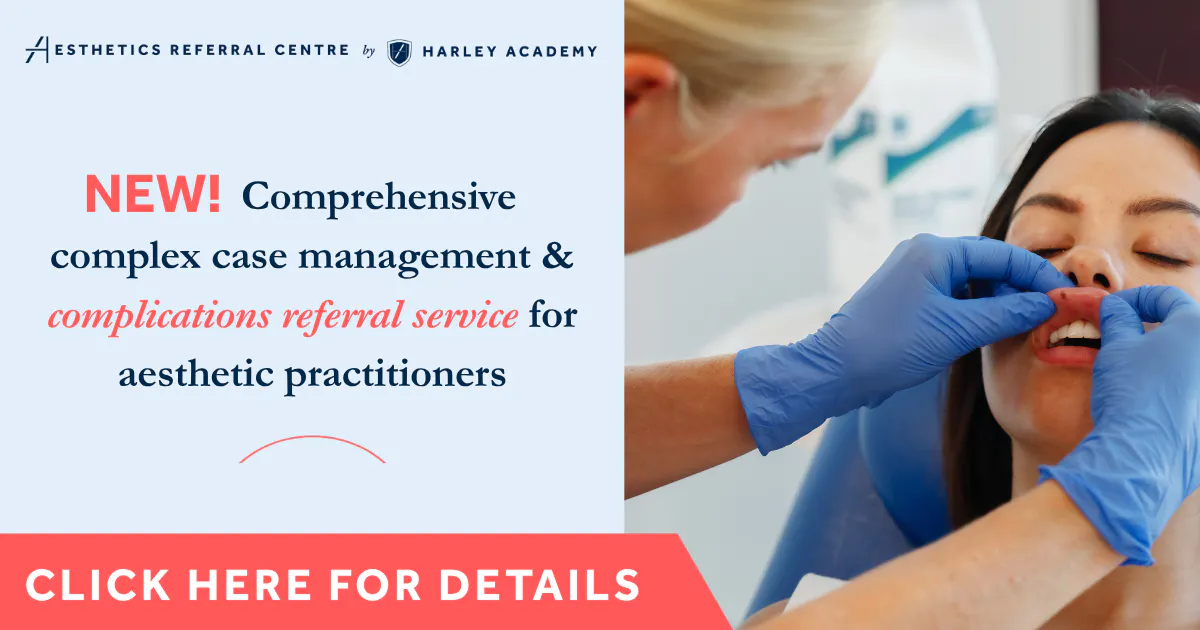
Aesthetics Referral Centre
We support her stance here. In fact, this is precisely why we’re launching the Aesthetics Referral Centre. A dedicated complex case and complications management service for medical aesthetics practitioners, so you’re never alone when a complication strikes.
We’ll be explaining all about this new subscription service and London complications treatment clinic soon. If you’d like to find out more in the meantime, you can arrange a call with our team.
As further news on aesthetics regulation unfolds, we’ll be sure to bring you updates, so check back or follow us on Instagram to stay in the loop.
All information correct at time of publication
Download our full prospectus
Browse all our injectables, dermal fillers and cosmetic dermatology courses in one document
By submitting this form, you agree to receive marketing about our products, events, promotions and exclusive content. Consent is not a condition of purchase, and no purchase is necessary. Message frequency varies. View our Privacy Policy and Terms & Conditions
Attend our FREE open evening
If you're not sure which course is right for you, let us help
Join us online or in-person at our free open evening to learn more
Our Partners














STAY INFORMED
Sign up to receive industry news, careers advice, special offers and information on Harley Academy courses and services