

Understanding Botox Complications: Spocking and Brow Ptosis

Although upper face toxin is a straightforward cosmetic treatment, there are many things that can go wrong. Here we examine two common complications that cause undesirable aesthetic outcomes: spocking and brow ptosis.
Did you know that there are two different types of brow ptosis? Can you tell the difference between a spock and a brow ptosis? They're very different! Do you know how to manage these botox complications?
Read on for our advice aimed at aesthetic practitioners if you want to elevate your understanding and patient outcomes…

Understanding the difference between a Spock and brow ptosis
Let’s explore each of these complications in turn, so you can learn what they look like, why they happen and management strategies.
Mephisto Sign aka “Spocking”,“Spock brow” or “Samurai brow”
What does a Spock look like?
- An excessive upwards arching of the lateral (outer) brow
- Brow takes on a sharp, peaked appearance, as seen on the Star Trek character, Dr Spock, after whom this colloquial name for a mephisto sign comes.
Why can Spocking happen after upper face toxin treatment?
A mephisto sign may present if the…
- Central and medial fibres of the frontalis become weakened by the neurotoxin
- Lateral fibres of the frontalis were not injected or were under-treated
- Remaining active lateral frontalis pulls upward unopposed, causing lateral brow over-elevation
- Frontalis muscle has underlying overactivity.
How to correct a Spock after botox
Should spocking be present at your patient’s review appointment, you can try correcting this through additional treatment to the lateral frontalis. Administer 1–2 small units of toxin to the lateral frontalis on each side, within the horizontal rhytids that are present on elevation of the brows.
Brow ptosis
Eyebrow ptosis can occur medially, laterally or both medially and laterally simultaneously. Let’s look at each type in turn…
What does lateral brow ptosis look like?
Drooping of the outer third of the eyebrow - the tail - while the inner or central brow may be normal or only mildly affected, is known as a lateral brow ptosis.
If toxin weakens the central frontalis more than the lateral frontalis, the tail of the brow may drop. This creates iatrogenic lateral brow ptosis.
Additional signs of a brow ptosis can include:
- Hooding of the outer eyelid
- Loss of lateral canthal ‘lift’
- Asymmetry between brows
- Compensatory forehead wrinkling as patients raise their brows to see better.
The lateral brow has less muscular support so, although this is a common botox complication, it can also be a natural presentation. This is particularly associated with ageing, loss of skin elasticity, weakening of the fascia and soft tissue support, frontalis hyperactivity, as well as bone volume loss around the orbit, leading to outer-brow descent.
It can also be caused by muscle imbalances, such as overactive depressor muscles or where the frontalis is underactive laterally.
You may often hear complaints about brow descent in the form of:
- “Heavy eyelids”
- “Tired eyes”
- “Sad eyes”
- Unable to apply mascara/eye shadow normally.
Assessing your patient thoroughly prior to treatment, and documenting their appearance before and after treatment is essential. After all, if someone has a natural brow ptosis, you’ll need to reflect on the best approach for their treatment - if any - before proceeding.
Why can lateral brow ptosis happen after botox?
The three most usual causes are:
- Over-treating the frontalis laterally
- Failing to balance with depressor muscle treatment
- Low or widespread injection placement.
Can lateral brow ptosis following botulinum toxin be corrected?
Should a lateral brow ptosis occur, the results are usually that the tail of the brow drops within 3–10 days of treatment and heaviness or hooding worsens.
These symptoms will usually last until the toxin wears off (8-12 weeks), though they may resolve sooner, around 6 weeks after initial treatment.
However, a confident aesthetic practitioner may be able to perform some strategic lifting by weakening brow depressors (orbicularis, corrugator, depressor supercilii). If taking this approach, which may produce subtle elevation to the tail of the brow, avoid over-weakening the frontalis laterally.
Novice injectors who lack confidence and experience may wish to refer their patient onwards or advise them to let the treatment wear off, rather than risk making things worse.
Often, the only option is to wait for the botulinum toxin to wear off.
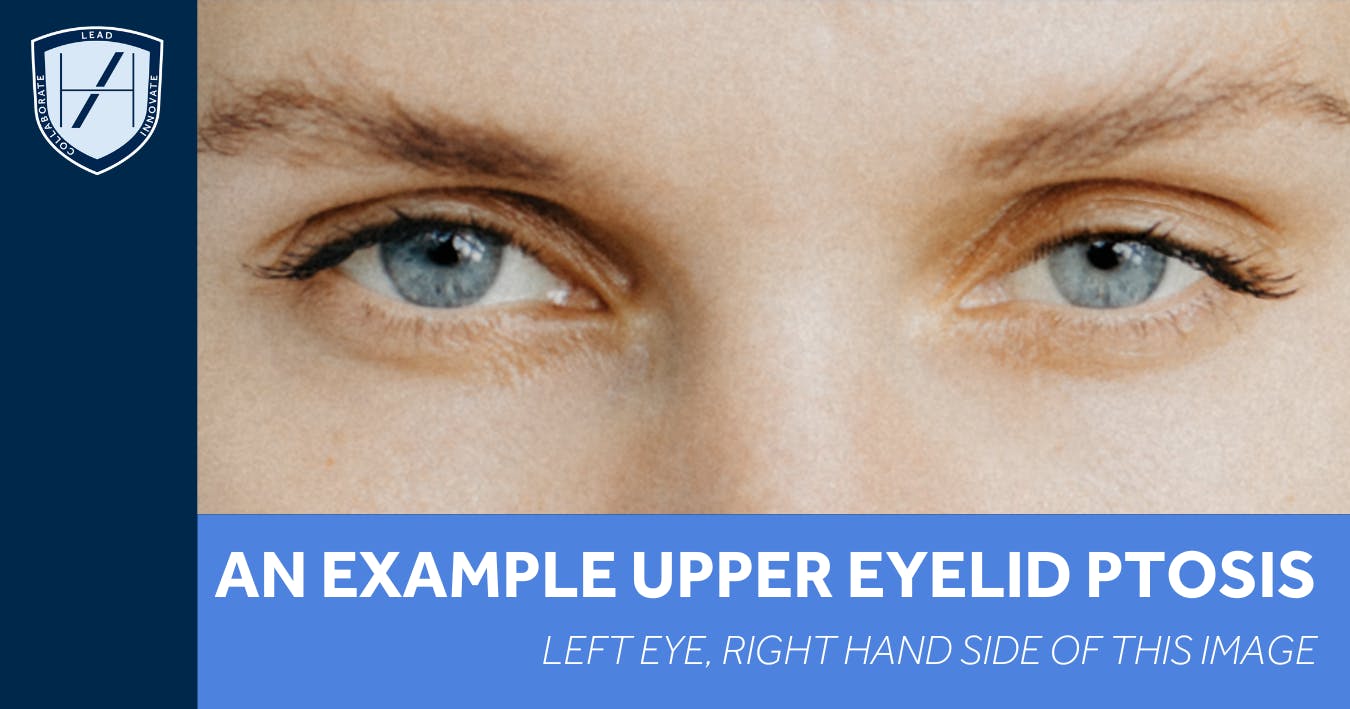
How does medial brow ptosis present?
Whilst lateral brow ptosis causes a drop to the tail of the brow, medial brow ptosis sees a drooping of the inner third of the eyebrow, near the glabella. This area is also known as the brow ‘head’ which appears to be being pulled down in this instance.
The result is a look often described as “sad”, “angry” or “heavy”, as the brow head sits lower or slopes down, medially. Alongside this, you may also notice signs of:
- Brow asymmetry
- Vertical glabellar creases
- Increased need to raise brows to compensate
- Hooding more centrally than laterally.
What causes a medial brow ptosis after toxin?
Medial brow ptosis following botox occurs when the corrugator supercilii, procerus and/or depressor supercilii overpower the frontalis.
This complication is usually a result of:
- Overtreating the frontalis, or placing frontalis injections too low down
- Failing to reduce corrugator/procerus activity adequately
- Failing to treat the depressor supercilii adequately.
The result is a loss of medial frontalis lift, unopposed depressor action and brow head droop that can appear from a few days after treatment.
Can medial brow ptosis after toxin be treated?
If medial brow ptosis occurs due to low injections in the frontalis and the glabella complex remains somewhat active, then additional treatment might offer some relief. Treating the glabella complex - the procerus and corrugator supercilli - may help to reduce medial brow heaviness.
Additionally, further treatment of the depressor supercilii may help to lift the medial brow again.
If balanced correctly, your patient may start to see brow head elevation within 4 to 7 days. However, in many cases, waiting for the botulinum toxin to wear off may be the only option.
Again, we recommend only confident aesthetic practitioners tackle this type of corrective work.
To avoid medial brow ptosis, you should also avoid weakening the frontalis medially, below the line of convergence, to preserve its lift function.
When lateral and medial brow ptosis present simultaneously
Medial and lateral brow ptosis can happen at the same time. This combined presentation is not uncommon after poorly balanced neuromodulator treatments.
Clinical presentation of a combined medial and lateral brow ptosis
When both ptoses are present, the brow appears:
- Globally flattened or depressed
- Low at both the brow head (medial ptosis) and the brow tail (lateral ptosis)
- Often still highest in the mid-brow, creating a shallow “V” or tent shape known as a ‘mid-brow peak’. This is a key diagnostic point, notable because the frontalis is strongest at the middle-third point, leaving heavy inner and outer ends.
The result is associated with heavy upper lids across the entire orbit, complaints of a “tired” or “sad” appearance, and possibly forehead overactivity as the patient tries to compensate.
What causes medial and lateral iatrogenic brow ptosis?
This double-whammy happens when toxin placement disrupts balanced brow mechanics. Most commonly, it’s a result of mistakes such as:
- Over-treating the frontalis
- Treating lateral frontalis without counter-balancing depressors
- Under-treating the glabella complex.
The resulting aesthetic is one of a global brow depression, with loss of lift both medially and laterally. Onset is usually within 3-10 days of treatment, with patients often reporting a “tight forehead” and “heavy eyes”.
Can a global brow droop after botox be corrected?
Firstly, confirm that the issue is definitely iatrogenic. If you’re happy that this is the case, weigh up whether the subtle results any ‘botox brow lift’ correction is likely to give is worthwhile, versus letting the patient ride it out until their treatment wears off naturally.
Neurotoxin rebalancing may be possible but it’s complex and must preserve frontalis lift, especially laterally, whilst also weakening the brow depressors.
You’ll need to target the:
- Procerus
- Corrugator supercilli
- Depressor supercilii
- Orbicularis oculi (lateral fibres).
Medial or lateral low frontalis injections and over-treatment of the frontalis must be avoided.
Once again, if you’re not sufficiently confident and competent enough to do this, you can refer them on to a more experienced peer.
Best ways to avoid botox complications as an aesthetic practitioner
As the saying goes, prevention is better than cure. So how can you prevent botox complications from arising in the first place? Here are our top three steps…
1. Learn your theory
Everyone wants to get straight into injecting but the deeper your understanding of facial anatomy and neurotoxin mechanisms of action, the further ahead you’ll be when you start to get hands on.
We cannot stress the difference having a sound knowledge of theory makes to accelerating your learning journey. From facial anatomy, product selection, dosing and reconstitution methods to understanding botulinum toxin spread, danger zones and injection techniques. There is so much to take in that will make you a better injector.
From our entry-level Foundation Training in Medical Aesthetics course upwards, you’ll receive access to detailed, self-paced eLearning to establish this grounding.
2. Undertake a reputable botox course and aesthetics training suited to your experience level
Whether you’re a healthcare professional looking to get started in aesthetic medicine, or are more experienced and wanting to gain a formal qualification, ensure you pick a botox course that’s suited to you. This usually means finding a supportive blend of evidence-based theory and practical, mentored injecting.
At Harley Academy, we offer accredited cosmetic injectables training, including botox courses, for beginners up, from our JCCP-approved aesthetics training campuses in Manchester and London. We also offer online courses for non-UK aesthetic medicine professionals who want to gain more rigorous insights and elevate their practice.
3. Practice, practice, practice!
Once you’re able to start treating outside of a training environment, we encourage you to do so - and regularly. If you’re really looking to make a success of your aesthetic practice, you need to treat patients on a regular basis.
Not only will this build your client list, skills and confidence, but seeing a range of different people, with different goals and presentations, will allow you to put your training to the test!
Botox is consistently one of the most requested cosmetic procedures, with no signs of demand slowing. So, once you’ve completed your basic aesthetics training and are insured to practice, get going! Many successful clinics have been built on botulinum toxin treatments, so don’t feel you have to branch out too soon. Build your confidence, competence and credibility in a highly commercial treatment, until you’re ready to expand your offering.
Harley Academy Level 7 trainees who are nearing the end of their course, and recent graduates are welcome to apply for our exclusive Clinical Placement. This programme provides a 4-month initiative where you’ll treat your own patient list - provided by us - at The Academy Clinic in London or Manchester. Gain valuable experience administering treatments in a busy clinic, further training in treatments such as advanced botox, career advice and support from our faculty, plus a reference for those looking to work for leading clinics.
If you’re interested in learning more about any of these opportunities for healthcare professionals in, or considering a career in aesthetic medicine, book a call with us now.
All information correct at time of publication
Download our full prospectus
Browse all our injectables, dermal fillers and cosmetic dermatology courses in one document
By submitting this form, you agree to receive marketing about our products, events, promotions and exclusive content. Consent is not a condition of purchase, and no purchase is necessary. Message frequency varies. View our Privacy Policy and Terms & Conditions
Attend our FREE open evening
If you're not sure which course is right for you, let us help
Join us online or in-person at our free open evening to learn more
Our Partners












STAY INFORMED
Sign up to receive industry news, careers advice, special offers and information on Harley Academy courses and services