

Scotland Passes Aesthetics Regulation Bill

Scotland has become the first country in the UK to pass an aesthetics regulation Bill. This effort to introduce legislation around non-surgical cosmetic procedures, including botox and fillers, is now awaiting Royal Assent.
In a meeting of the Scottish Parliament on 17th March 2026, a number of amendments to the previous form of the Non-surgical Procedures and Functions of Medical Reviewers (Scotland) Bill were agreed. Here we explore some of the key changes and discussions, plus what the final legislation entails for Scotland.
We also explain why the question of what qualifications are needed to practice aesthetics in the UK are ongoing.
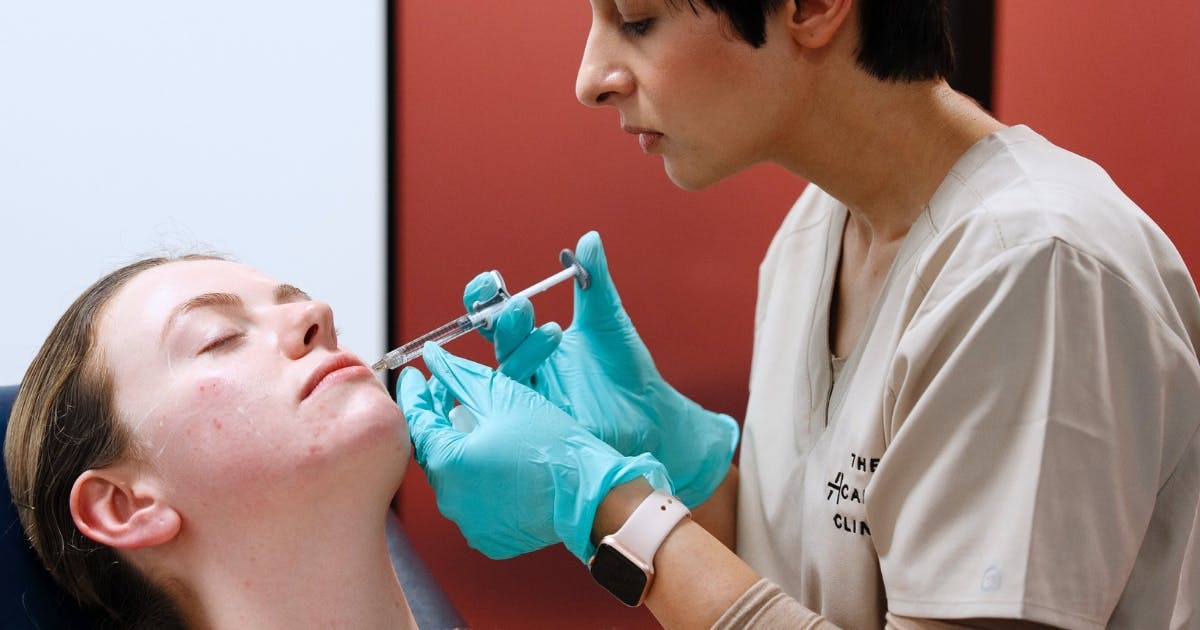
Highlights from the Scottish Bill to regulate aesthetic practice
The final version of the Bill contains the following key points. It is now awaiting Royal Assent, upon which it will become an Act, with the law being expected around May 2026.
- Cosmetic treatments banned for patients under 18 years of age
- All non-surgical cosmetic procedures must be carried out in premises registered with Healthcare Improvement Scotland (HIS)
- Non-medics may practice non-surgical aesthetics, including cosmetic injectables, only under the supervision of an appropriately qualified, prescribing healthcare professional
- Fines of up to £20,000 will be imposed on practitioners who do not comply with the new regulations.
This Bill also allows the government to set further standards relating to mandatory aesthetics training qualifications for practitioners, and safety standards. You can refresh your memory as to the more detailed points of the Bill in our previous article.
Clarification of Group 1 non-surgical procedures
Jenni Minto, the Scottish Minister for Public Health and Women’s Health, advised that a number of Amendments to the Bill were made. These were for enhanced clarity of the different procedures and which category they fall under.
Group 1 procedures are the highest risk category, equivalent to England’s proposed ‘red’ category under a RAG-rating system.
The following Amendments were highlighted:
- 1 explains that ‘a procedure may fall within several procedure descriptions in schedule 1 or may combine different kinds of procedures and still be a non-surgical procedure for the purposes of the Bill’
- 8 and 9 set out that ‘injectable and intravenous procedures may involve the use of a microneedle’.
Osteopaths allowed to practice aesthetics without supervision
We previously reported on the heated debate around whether osteopaths were considered healthcare professionals in the context of aesthetic practice.
The General Osteopathic Council and other bodies lobbied hard for members to be treated in the same way as other medics. This would mean both practising without supervision, and being able to supervise non-medic practitioners.
Objections to osteopaths being considered ‘healthcare professionals’
Dr Sandesh Gulhane, an NHS GP and Conservative MP for Glasgow, proposed an Amendment (10) to remove ‘persons who are regulated by the General Osteopathic Council’ from the list of regulated healthcare professionals.
He wanted to “change the definition of ‘regulated healthcare professional’ in the Bill so that it does not include osteopaths who are regulated by the General Osteopathic Council.
“Osteopathy is a pseudo-science,” Dr Gulhane said. “There is very limited evidence of any effectiveness whatsoever, and those who practise it should not be considered regulated healthcare professionals.
“Osteopaths are unable to prescribe medicines for a reason, and they do not inject Botox. That alone means that they are not entitled to be covered by the healthcare exemption. My amendment would strengthen the definition of “regulated healthcare professional” in the bill and ensure that only those who are properly qualified will be referred to as such.”
“A matter for healthcare professionals and their regulators”
The Scottish Health Minister noted that those voting on this proposed Amendment should consider this “a matter for healthcare professionals and their regulators”.
Ultimately, Amendment 10 was rejected, so osteopaths remain in the ‘healthcare professional’ cohort.
The point about putting the ball in the court of professional regulators over who can practice aesthetic medicine was an interesting one, however.
Join our FREE online event for healthcare professionals wanting to get started in aesthetics or further their basic aesthetics training with a regulated, postgraduate qualification
Non-medic aesthetic practitioners and approved premises
Ash Regan, the independent Scottish MP for the Edinburgh Eastern constituency proposed Amendment 11. This related to the impact of requiring qualified non-medic aesthetic practitioners to be supervised, and the meaning of ‘permitted premises’. She said:
- Most aesthetics patients - “80 per cent, we think” - are women
- The majority of providers are women
- 80 per cent of the providers in this space are non-medical.
She then raised concerns around non-medic injectors being required to have supervision from a prescribing medic, and practice from Health Improvement Scotland (HIS) premises. Her points related to how many women the Government “will be putting out of a job”.
Whilst confirming she wants “aesthetics services to be provided in safe, clean premises by qualified practitioners”, she had reservations. She felt the current Bill is “irresponsible law making” and businesses should be compensated.
Non-medics with regulated aesthetics qualifications
Regan gave the example of one of her constituents, who had shared her story, as follows.
The MP advised, “She holds regulated Office of Qualifications and Examinations Regulation qualifications in aesthetic practice at levels 5 and 7, which cost her £15,000. The level 7 qualification also required more than a year of structured study covering facial anatomy, complications management, clinical assessment and patient safety. She also maintains level 3 first aid, including anaphylaxis training.”
She said that this constituent told her:
“My clinic operates as a fully licensed premises. I hold a skin-piercing licence from Edinburgh City Council. My business is fully insured, and insurance within the aesthetic sector requires practitioners to demonstrate appropriate training, treatment protocols, risk assessments and clear procedures for managing complications before any cover is granted.
“In the past year alone, I have safely treated 496 injectable clients in my clinic. But under the current drafting, the interaction between sections 3 and 4 of the bill means that permitted premises are effectively limited to clinics run by a prescribing doctor, nurse, dentist or pharmacist. In practice, that means that the ability to operate a clinic may depend on professional title rather than on aesthetic-specific training or experience.”
Removing HIS requirement and supervision for non-medics
With this type of feedback in mind, Regan proposed Amendments 11, 12, 13, 14, 15, 29 and 30 to the Bill. These sought to recognise “appropriate qualified non-healthcare aesthetics practitioners and premises within the regulatory framework”.
Two of her key objectives were to:
- Define the role of aesthetic professional “by reference to qualification threshold” rather than job title (Amendments 11, 13 and 14)
- Allow ministers to establish by regulation a licensing scheme for non-healthcare premises, removing the HIS requirement for non-medics (Amendments 12 and 15).
These proposals were backed by Alex Cole-Hamilton, Scottish Liberal Democrat MP for the Edinburgh Western constituency.
Jenni Minto, SMP, responded, “The proposed alternatives would weaken public safety by removing the requirement for a healthcare professional to be involved in those settings.”
She added that an equality assessment had been carried out and, whilst she empathised with the intentions here, “ the requirement for a healthcare professional to be involved is the most important part of the Bill”. This led to a recap of why this regulation is being introduced and prescribing healthcare professionals need to be involved in the process.
Removing need for supervision for all appropriately qualified practitioners
Jeremy Balfour, independent MSP for Lothian, also tabled Amendment 5, which was supported by Ash Regan.
He advised his proposal ‘would allow practitioners to provide non-surgical procedures unsupervised if they were a regulated medical professional or a non-medical practitioner with a qualification relevant to the procedures that they were providing, “at a level at least equivalent to level 11 of the Scottish credit and qualifications framework”.’
The SCQF Level 11 in Scotland equates to a Level 7 on the Regulated Qualifications Framework (RQF) in England, Wales, and Northern Ireland.
Jenni Minto advised that “many practitioners hold a qualification at level 7 of the Ofqual framework or level 11 of the Scottish credit and qualifications framework, and the amendments seek to recognise that training. However, I do not intend to support any amendments that would prejudge a decision on the appropriate training or qualification requirements. That would be a matter for future regulation under section 5(1). My reluctance should not be seen as a judgment against those well-recognised qualifications.”
She added, “The Scottish Government will engage with practitioners and training providers before taking decisions, and I hope that standards can be set at the same level in England and Scotland for the benefit of practitioners… It is fundamental to the Bill that a healthcare professional is involved in settings that provide procedures to complement the aesthetics practitioners, such as in the event of complications that require the emergency administration of medicines.
“The amendment also predetermines training and supervision standards, which are still to be developed and consulted on. The Government also has concerns about the legislative competence of the amendment because of its interaction with the Medicines Act 1968 and the regulation of healthcare professionals…”
Following a vote on each of these proposed Amendments relating to non-medics and permitted premises, none were agreed.
Clear timelines for compliance and phased implementation
Dr Ghulane, SMP, proposed Amendment 13 to clearly set out the timeline for compliance with this new legislation. He also recommended a phased implementation period, for example, one that allowed practitioners time to obtain the necessary aesthetics training and qualifications.
He said, “That would help businesses, leave flexibility for ministers and ensure that providers can effectively comply with new regulations.”
Jenni Minto disagreed with the need for such an Amendment. She countered, “I can confirm that that is already possible under section 18. The amendment is unnecessary… as the transitional provision that is specified might not always be the most appropriate. The amendment would make it more difficult for ministers to put in place appropriate regulations with the right protections”.
A vote resulted in this proposal being rejected.
The UK aesthetics regulation implementation timeline
Essentially, only the government's own technical amendments raised during this meeting were passed. The motion S6M-21100, in the name of Jenni Minto, on the Non-surgical Procedures and Functions of Medical Reviewers (Scotland) Bill at stage 3 was then passed almost unanimously. You can read the full Bill on the parliamentary website.
Hopefully, this will lead to England moving more swiftly on its own Bill, which is currently awaiting another public consultation. This was said to be happening in “early 2026” but by mid-March 2026, there is still no further update.
As we await this Scottish Bill becoming law, there are three important aspects we still need information on.
- What are the mandatory aesthetics training requirements practitioners need to hold to comply with the law?
- What is the timeline for implementation?
- How will this law be enforced?
Legal requirements for aesthetic practitioner qualifications
As we’ve already covered, for legal reasons, the UK requires a joined-up approach to setting aesthetics qualification rules. This means Scotland is likely now waiting for input from England, which is notoriously slow when it comes to legislation, especially in relation to aesthetics.
As has been reiterated here, and throughout the Scottish Parliamentary discussions relating to regulation, the Level 7 qualification is widely being touted as the gold standard for aesthetics.
In Scotland, this is being talked about in relation to both healthcare professionals and non-medics. However, healthcare professionals would not require the oversight of a prescribing medic when they administer treatments.
There will also need to be a regulatory framework for aesthetics training providers, so that practitioners know the courses they are taking are adequate.
For example, Harley Academy is approved by the Joint Council of Cosmetic Practitioners (JCCP) as a postgraduate aesthetics training provider, and our Level 7 Diploma in Cosmetic Injectables course is separately both JCCP-approved and Ofqual-regulated. It’s further mapped to the Health Education England (HEE) guidelines, and the latest evidence through the Global Evidence Matrix (GEM©) framework. This provides healthcare professionals with an internationally accredited aesthetic medicine qualification and a PGDip Aes post nominal title.
When and how will this law start being enforced?
Many Scottish aesthetic practitioners have raised concerns around how quickly the law will be introduced and how it will be policed. HIS capabilities have been called into question, with regard to the logistics of getting every premises registered, and keeping them under scrutiny.
Whilst a specific Amendment to the Bill guaranteeing a phased compliance period was rejected, this approach is still favoured by many. It is also possible under the terms of the Bill, so clear guidance on what practitioners will need to do and when by should be forthcoming.
What we know for now is that the law is likely to be passed around May 2026, however, without the education regulatory piece, the puzzle remains incomplete. As such, initial compliance is likely to revolve around premises standards.
As always, we’ll update you on the latest aesthetic regulation developments as they happen, and hope to see UK momentum building soon. In the meantime, if you have any queries about getting started in aesthetics now, or formalising your experience with a regulated Level 7 qualification, book a call with our team for personalised advice on your options.
We offer an expedited pathway for existing medical aesthetics practitioners, through Recognition of Prior Learning (RPL). Our Fast Track Level 7 Diploma means you could complete your full course within 6 to 12 months. Our experienced team will be happy to guide you through the best aesthetics training pathways for you and answer all your questions.
All information correct at time of publication
Download our full prospectus
Browse all our injectables, dermal fillers and cosmetic dermatology courses in one document
By submitting this form, you agree to receive marketing about our products, events, promotions and exclusive content. Consent is not a condition of purchase, and no purchase is necessary. Message frequency varies. View our Privacy Policy and Terms & Conditions
Attend our FREE open evening
If you're not sure which course is right for you, let us help
Join us online or in-person at our free open evening to learn more
Our Partners











STAY INFORMED
Sign up to receive industry news, careers advice, special offers and information on Harley Academy courses and services