

GEM© Clinic Case Studies: Aesthetic Medicine Quiz for Injectors
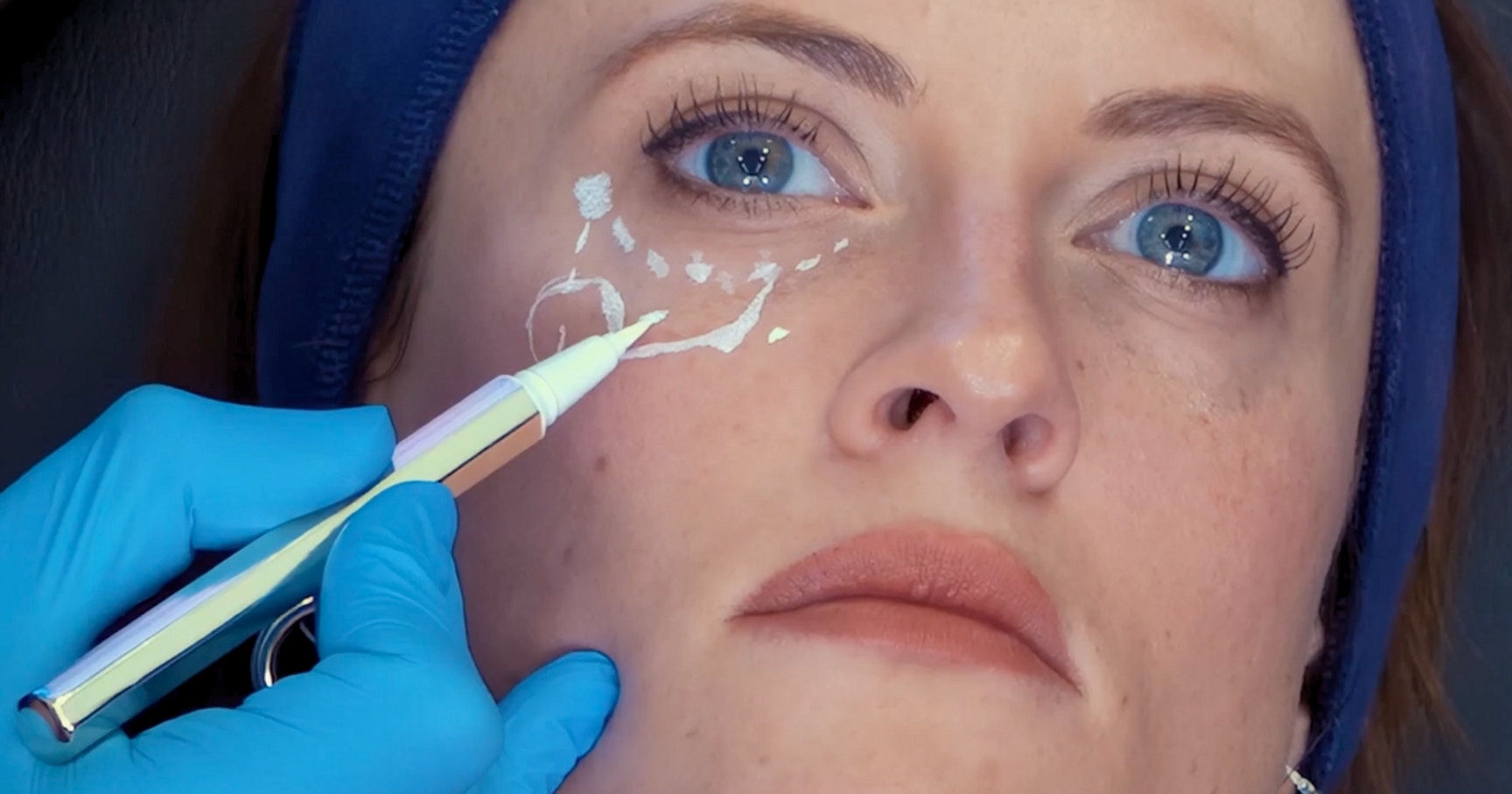
Test your aesthetic medicine knowledge in our multiple-choice quiz, based on the 2025 GEM© Clinic live case studies.
All answers can be found in the live treatment videos posted to the Harley Academy YouTube channel.
So, if you’re a Global Evidence Matrix (GEM©) subscriber, or a regular YouTube viewer, you should be able to nail these tricky teasers!
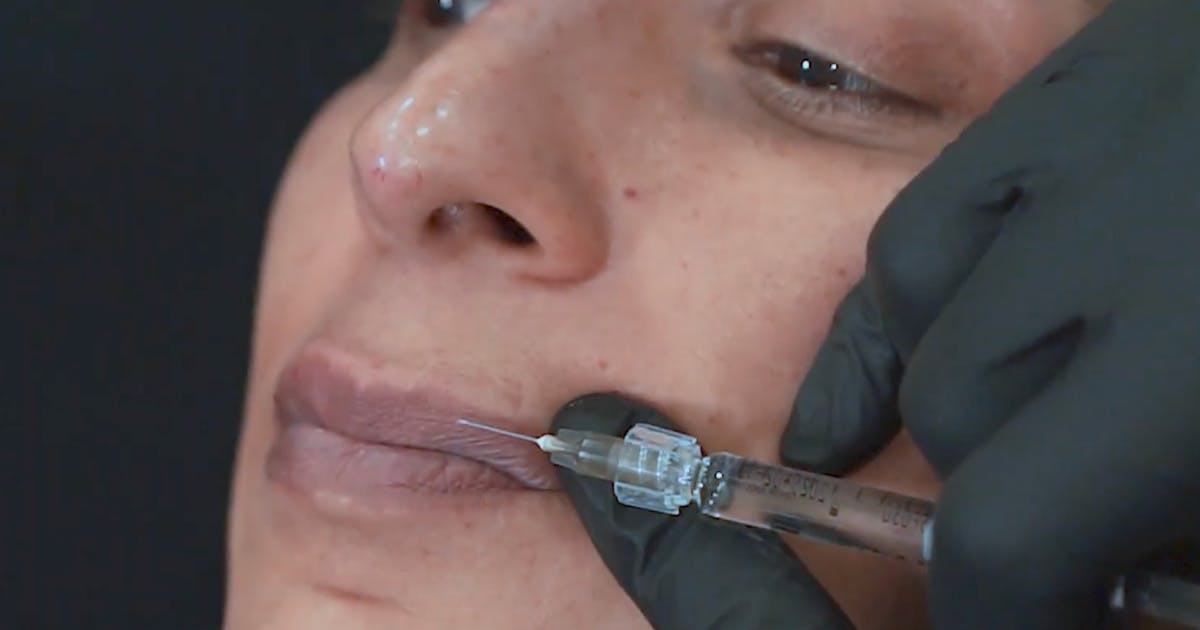
Aesthetic Medicine Quiz questions
Here are your 10 questions - best of luck! Once you’ve completed them, you can scroll down to check the answers and see how many you got right.
1. The vertical tenting lip filler technique
In Em’s GEM© Clinic case study, Dr Tristan Mehta - Harley Academy’s Founder & CEO - demonstrated a vertical tenting lip filler technique. He explained that you should start injecting from the GK point, but what does “GK” stand for?
A) Glogau-Klein point
B) Glagau-Klein point
C) Glagao-Klein point.
2. Cheek filler: Injecting into the mobile midface
You may remember the concept of the ‘mobile midface’ versus the ‘fixed midface’ from our GEM© Clinic sessions. Zygomatic arch cheek filler treatments are in the mobile midface, which means your injection depth should be deep. But why?
A) Superficial placement increases the risk of vascular compression over the zygomatic arch
B) Deeper placement is needed to achieve better projection and longevity in this area
C) The filler will move when the patient smiles if placed superficially.
3. Key anatomical knowledge for non-surgical rhinoplasty
Various GEM© Clinic case studies have featured the advanced aesthetic treatment, non-surgical rhinoplasty aka ‘nose filler’. Dr Tristan has explained that there’s a lack of depth control when treating the tip of the nose, making it particularly high risk. This relates to where the five layers of the face begin. But where do they begin?
A) 20% up the nose
B) 25% up the nose
C) 30% up the nose.
4. What G prime filler do we use when treating the SOOF
Regular viewers will have watched a lot of fat pad treatments, addressing the suborbicularis oculi fat. But when we’re injecting the SOOF, what type of filler are we using?
A) Low G prime
B) Medium G prime
C) High G prime.
5. Temple filler injection technique
You’ll have seen a number of temple filler treatments in our 2025 GEM© Clinic case study videos. But did you make a note of the ‘one up, one over’ technique Dr Tristan explained? What does this involve?
A) Injecting 1cm up the temporal crest and then 1cm down into the temporal fossa
B) Establishing a landmark that is 1cm away from the orbital rim on both sides
C) Injecting 1cm up the temporal artery and then 1cm down into the temporal crest.

6. Creating jawline definition using filler
Jawline contouring is a popular request among aesthetic patients, especially for sharpening this area up. When navigating the mandibular border to add definition, the Global Evidence Matrix advises using cannula fanning. But where should you be injecting?
A) Over the mandibular border
B) On the front of the mandibular border
C) Both over and on the front of the mandibular border.
7. Anatomical considerations when assessing the chin
A number of the GEM© Clinic case studies feature chin filler, which is a popular aesthetic treatment for both men and women. This can be for profile balancing, to correct asymmetry, for rejuvenation or a combination of these reasons. When assessing the width of the chin, Dr Tristan advises that you should consider it in relation to what?
A) Intercanthal distance and interalar distance
B) Interpupillary distance and lip commissure width
C) A) for a feminine chin and B) for a masculine chin.
8. Treating the deep pyriform space
Do you remember Dr Tristan’s advice for locating the deep pyriform space during pyriform fossa filler treatment? He narrated each layer of the face he had to transverse to reach his anatomical target when treating Em. But which layers did Dr Tristan move through before reaching the bony deep pyriform space?
A) Skin, subcutaneous fat, SMAS, deep medial cheek fat
B) Skin, subcutaneous fat, SMAS, LLS muscle, deep medial cheek fat
C) Skin, subcutaneous fat, LLS muscle, deep medial cheek fat.
9. Lip filler injection depth
Whilst administering medial lip filler in Lara’s GEM© Clinic case study, Dr Tristan talked through relevant anatomy. In particular, he discussed the major vessels you need to avoid whilst injecting. But where did he note that these were located?
A) In front of the orbicularis oris muscle
B) Behind the orbicularis oris muscle
C) To the left of the orbicularis oris muscle.
10. Treating the labiomental crease with filler
We treat the labiomental crease in order to elongate the appearance of the lower two-thirds of the face. This is the result of reducing shadowing from beneath the lower lip and reducing tension in the chin. When treating the labiomental crease with a cannula, how many entry points should you use?
A) One entry point on each side
B) A single entry point for the full treatment
C) Either A) or B) depending on your patient.
Here are the answers…
1. The vertical tenting lip filler technique
The correct answer is A) Glogau-Klein point
When using a tenting lip filler injection technique to increase vertical height, you should start at the GK point aka the Glogau-Klein point. This refers to the peaks of the Cupid’s bow on the upper lip - a key anatomical landmark. Always ensure that, when you’re injecting the lips in this way, you respect the natural lip compartments for optimal results.
2. Cheek filler: Injecting into the mobile midface
The correct answer is C) The filler will move when the patient smiles if placed superficially.
When treating the mobile midface, you need to be injecting deeply to avoid this undesirable, unnatural-looking result. You can see a clip explaining the difference between the mobile and fixed midface on the Harley Academy Instagram account. Give us a follow while you’re there!
3. Key anatomical knowledge for non-surgical rhinoplasty
The correct answer is: C) 30% up the nose
The concentric layers of the face are not present in the lower 30% of the nose. Only once you are past 30%, where the nasalis muscle is, do the layers of the face begin. The cartiligeous tip of the nose - the bottom 30% - is made up of skin, connective tissue and cartilege. This is important to understand for nose filler treatments as it means there's no depth control when treating the tip, which is high risk. You can find out more about this in Part 2 of Amye’s GEM© Clinic case study.
4. What G prime of filler do we use when treating the SOOF
The correct answer is B) Medium G prime
Treating the suborbicularis oculi fat requires a middle-weight filler. A medium G prime filler will give you the viscosity and cohesivity you need. However, it doesn’t offer much elasticity, which is great for creating projection at this level. Learn more about locating the SOOF in the under eye section of Claire’s GEM© Clinic case study. This was the first case which launched our ongoing YouTube series.
5. Temple filler injection technique
The correct answer is A) Injecting 1cm up the temporal crest and then 1cm down into the temporal fossa
You can watch Dr Tristan Mehta demonstrate and talk through this temple filler technique in our Celine case study video. To administer this treatment, he switches out the needle of his filler syringe for a 25G, instead of the 27G it comes with, for improved sensitivity which is particularly valuable for aspirating here. When injecting this area, always palpate to ensure you’re avoiding the superficial temporal artery.

6. Creating jawline definition using filler
The correct answer is C) Both over and on the front of the mandibular border.
Using a cannula, you’ll want to fan your produce over and on front of the mandibular border for optimal jawline contouring. This approach ensures there’s no indentation and you have smooth results that help to sharpen the appearance of the jawline. Watch our GEM© Clinic case study for Hind for a full explanation and live jawline filler demonstration.
7. Anatomical considerations when assessing the chin
The correct answer is: A) Intercanthal distance and interalar distance
When examining these points in combination with the width of the chin, you’ll get a solid understanding of what type of approach is needed. This information will inform your chin filler treatment in terms of what will suit your patient’s face, whether male or female. This approach will guide you as to where length and/or projection may be preferable to adding width, for example.
8. Treating the deep pyriform space
The correct answer is B) Skin, subcutaneous fat, SMAS, LLS muscle, deep medial cheek fat.
In his Em GEM© Clinic case study, Dr Tristan talked through his live pyriform fossa filler treatment, which involved moving through the layers of the face, as follows:
- Skin, subcutaneous fat, SMAS, LLS muscle, deep medial cheek fat
- Next, moving through the SMAS of the midface
- Then moving past the LLS muscle which sits on top of the deep medial cheek fat
- Lastly, he moved through the deep medial cheek fat, which allowed him to glide smoothly into the bony target…
- Reaching the deep pyriform space.
9. Lip filler injection depth
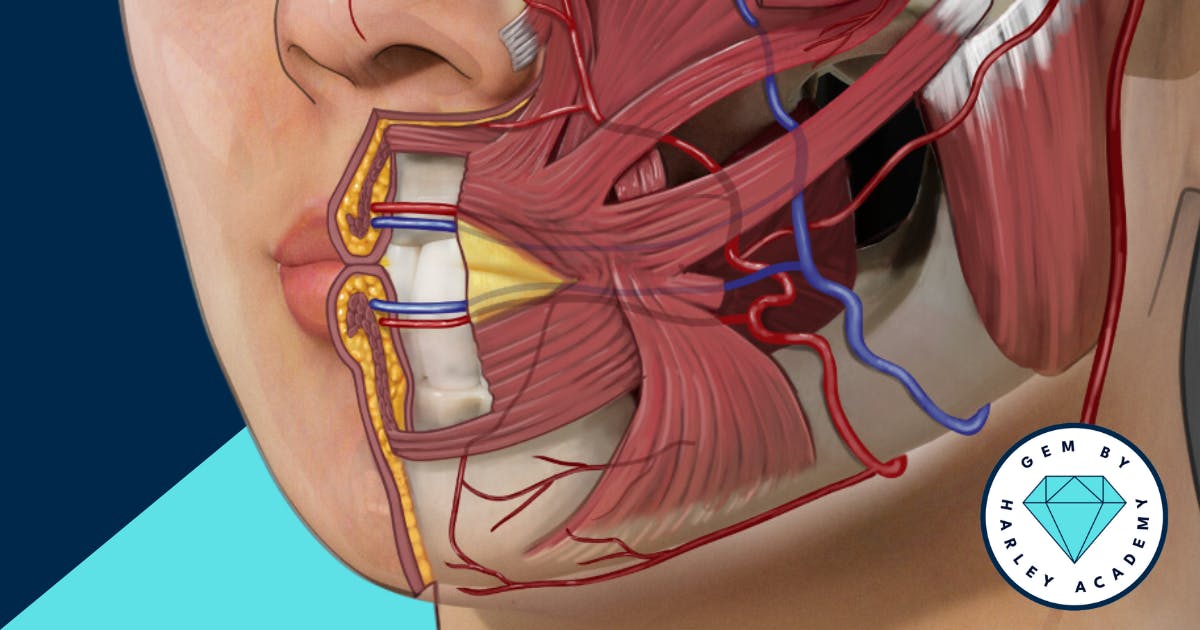
The correct answer is B) Behind the orbicularis oris muscle.
As the major vessels you need to avoid are usually located behind the orbicularis oris muscle, your injection depth should be in front. Even when using a bolus lip filler technique, you should be careful to remain in front of the muscle. Watch Lara’s GEM© Clinic case study video to learn more and watch Dr Tristan’s live demonstration.
10. Treating the labiomental crease with filler
The correct answer is C) Either side, or one side only, depending on your patient
Sometimes you can deposit filler from a single entry point when treating the labiomental crease, as Dr Tristan does in Part 2 of Amye’s GEM© Clinic cases study. However, this is patient dependent and you may need to treat via an entry point on either side.
How did you get on with our quiz?
We hope you enjoyed testing your knowledge of evidence-based aesthetic practice!
To further your understanding of these concepts, check out our free GEM© Clinic case study series on the Harley Academy YouTube channel.
Gain a broader, deeper grasp of science-backed approaches and a more detailed look at the relevant anatomy, risks and techniques, by subscribing to our GEM© platform.
This exclusive tool is built to be accessible in whatever way works best for you. It comprises at-a-glance, quick reference information on key aspects of each filler treatment for the entire face, from novice to expert experience levels.
Equally, there’s longer-form content for a deeper dive into each aspect, plus source information so you can really dig down into the research backing this framework.
All Harley Academy medical aesthetics training courses are based on the Global Evidence Matrix data, for a science-enriched, up-to-date education. This is why we include a free 12-month subscription with all our Level 7 Diploma in Cosmetic Injectables courses, plus the International Advanced Aesthetics Diploma and The Aesthetics Accelerator course.
For further information on GEM© or our aesthetics courses for healthcare professionals in the UK or abroad, please get in touch. You can book a call back from our dedicated Course Advisors, who’ll be happy to provide you with personalised advice.
All information correct at time of publication
Download our full prospectus
Browse all our injectables, dermal fillers and cosmetic dermatology courses in one document
By submitting this form, you agree to receive marketing about our products, events, promotions and exclusive content. Consent is not a condition of purchase, and no purchase is necessary. Message frequency varies. View our Privacy Policy and Terms & Conditions
Attend our FREE open evening
If you're not sure which course is right for you, let us help
Join us online or in-person at our free open evening to learn more
Our Partners











STAY INFORMED
Sign up to receive industry news, careers advice, special offers and information on Harley Academy courses and services