

Call for Aesthetics Licensing Scheme for Practitioners in 2026
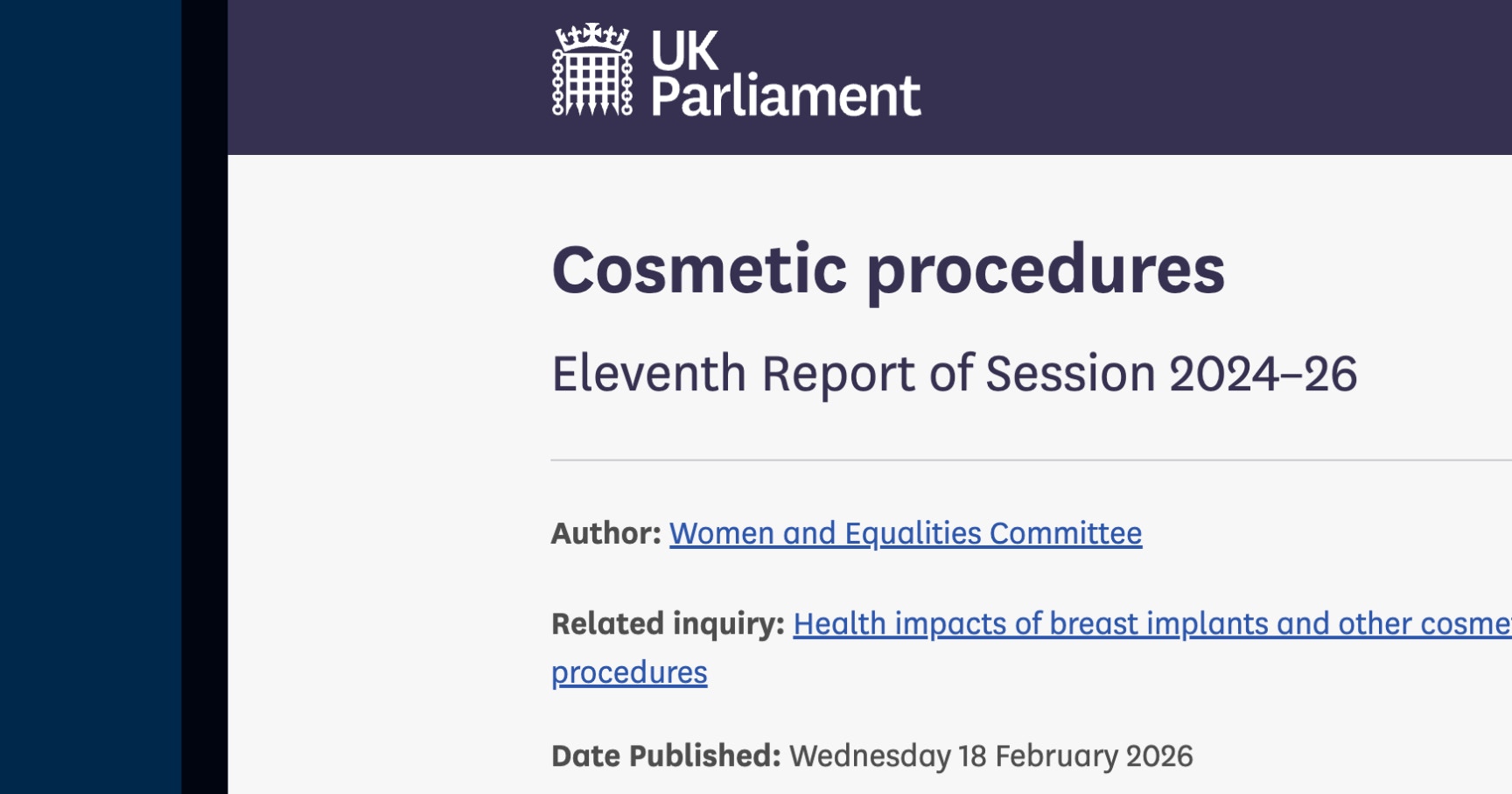
A cross-party House of Commons select committee has renewed calls for a UK aesthetics licensing scheme to be rolled out in 2026. This would be a mandatory licence every aesthetic practitioner must hold in order to carry out defined non-surgical treatments.
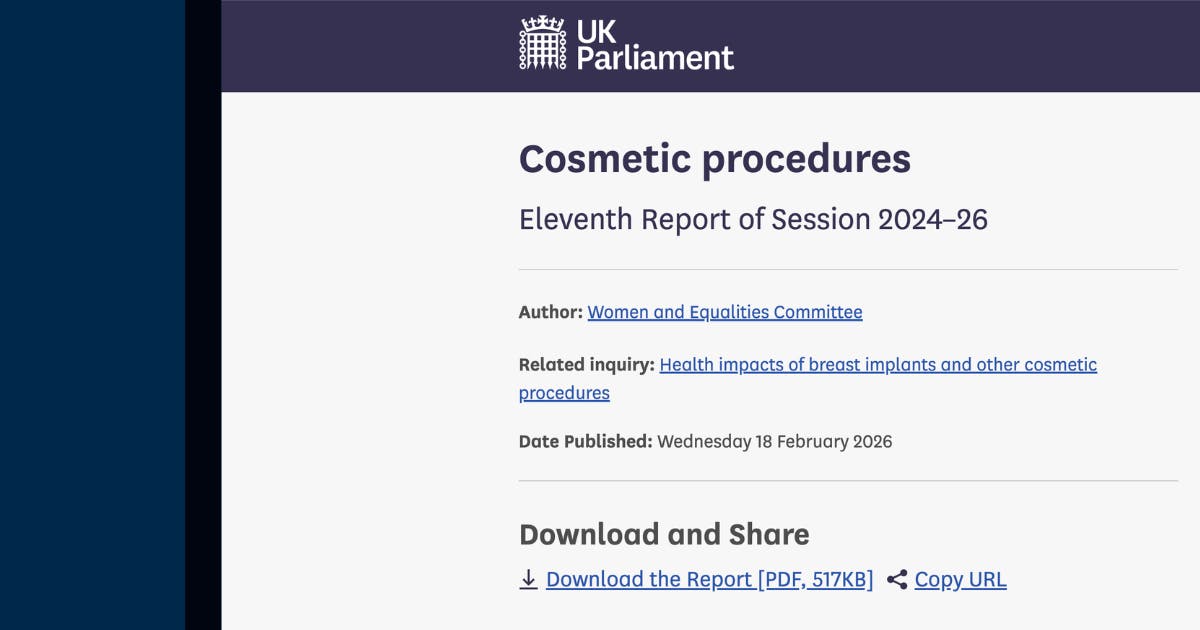
The UK Parliament’s Women & Equalities Commission released its report, detailing recommendations for aesthetics regulation, on 18th February 2026. It has accused the Government of “not moving quickly enough” in relation to introducing a licensing scheme.
A date of 18th April 2026 has been noted as the deadline for the Government’s response. However, with the current Parliamentary session (2024-2026) due to end in the Spring, this does not leave much time for action. Although any scheme introduced, may still have a lengthy roll-out period to ensure widespread compliance.
Here we dive into what these latest recommendations are, and the timelines involved. We also explore their potential impact on healthcare professionals considering entering aesthetic medicine now.
Current UK timeline for aesthetics regulation
Before we dive into the substance of this report, let’s quickly remind ourselves as to where regulatory efforts have got to.
- September 2023 - First regulatory proposals released for England, including RAG-rating procedures and introducing a licensing scheme for practitioners
- October 2023 - Public consultation opens and closes for comment on these proposals for England
- June 2025 - Scotland publishes its first proposals for aesthetics regulation. It states that it’s aiming to introduce this by May 2026
- August 2025 - England publishes its responses to the October 2023 consultation
- January 2026 - Scotland pushes ahead with final draft of regulatory proposals, however, it notes that it will need to align with the rest of the UK, especially on aspects relating to mandatory qualifications and education standards
- Early 2026 - The Government advised that another public consultation would take place in ‘early 2026’. No date was specified.
You can find more details on each of the above steps, and more, in the Regulation section of our Aesthetic Medicine Articles hub.
Restricting high risk cosmetic procedures to medics only
Since the tragic death of Alice Webb from a Brazilian Butt Lift (BBL) in 2024, there’s been increased scrutiny of body augmentations. The high risk nature of any procedures involving the body, particularly the buttocks, breasts or genitalia, have previously been singled out for safety concerns.
The Women & Equalities Commission has called for urgent action to restrict high risk procedures to qualified healthcare professionals only.
‘The Government should accelerate regulatory action,’ states the report. ‘Procedures that are deemed high risk such as liquid BBLs and liquid breast augmentations, which have already been shown to pose a serious threat to patient safety, should be restricted to appropriately qualified medical professionals immediately. Given the lack of appetite among medical professionals to carry out these procedures, this will act as a de facto ban in all but the most essential cases.’
Interestingly, this statement also adds, ‘A licensing system for ‘green’ and ‘amber’ non-surgical cosmetic procedures should be introduced within this Parliament.’ This suggests that all red-rated procedures - using the proposed RAG-rating system - should be restricted immediately, rather than solely body augmentations.
Introducing an aesthetics licensing scheme for practitioners in 2026
The introduction of a UK licensing scheme for aesthetic practitioners was first proposed in 2023. Despite this, the Committee noted, ‘The Government has not yet given any indication as to when a licensing system will be introduced’.
It was stated that this would involve holding two separate licences - one for the premises in which non-surgical cosmetic treatments would be carried out. The other, would be the licence to practice aesthetics and this would state which level of treatments the practitioner was permitted to administer.
In this new Committee report there are clear, urgent calls for this aesthetics licensing to be introduced by Spring 2026. The plan for a further public consultation for England in ‘early 2026’ was also addressed:
‘We welcome the proposals for a licensing scheme put forward in the Government’s consultation,’ the report states. ‘However, the Government is not moving quickly enough in introducing such a system. At present, individuals without any formal training can carry out potentially harmful interventions, placing the public at risk. Successive Governments have failed to act swiftly enough to legislate in this area allowing further harms to occur. The Government’s announcement of yet another consultation will cause more delays. This lack of timely action is fostering complacency in self-regulation within the industry and is compromising patient safety.’
This is a sentiment many across the sector would echo.
Mandatory standards for aesthetics training and qualifications
A key aspect of the report, and one that is critical to enabling any licensing scheme, is the question of aesthetics training and qualifications.
As we all know, the industry is rife with substandard training for both non-medics and healthcare professionals. There is huge variance in both the content and quality of aesthetics courses, which this report was quick to point out. It states:
‘The absence of a legislative framework for training and qualifications in the non-surgical cosmetic sector has resulted in significant variability in standards, with justified concerns about short courses, online training, and the ease of entry into practice.’
It continues, ‘The Government should bring forward consistent, enforceable standards for the non-surgical cosmetic sector that prioritise patient safety and competency, while ensuring training routes remain accessible and affordable for a predominantly female-led workforce.’
Aesthetic medicine and beauty professionals need consistent, scope-specific standards
Lesley Blair MBE, the CEO and Chair of the British Association of Beauty Therapy and Cosmetology (BABTAC), is quoted as saying “at the moment, you can go and do a half-day peel training or skin-needling training.”
She also made the point that ‘being a doctor does not automatically confer competence in these procedures’ without appropriate training. An ‘even playing field where medics, beauty therapists and beauty professionals train to consistent standards and work within their defined scope of practice’ was noted as her preferred pathway.
BABTAC is clear on its stance that cosmetic injectables should be restricted to appropriately trained medical professionals. This includes botox and dermal fillers.
Ofqual-regulated qualifications, no more short courses
Recapping what was set out in the 2023 proposals, it was noted that the Joint Council for Cosmetic Practitioners (JCCP) ‘had developed a competency framework for high-risk non-surgical cosmetic procedures.’
It also highlighted that ‘only a limited number of organisations, including universities, colleges and private training companies, are currently able to offer courses in these areas. A range of qualifications approved by the Office of Qualifications and Examinations Regulation (Ofqual) are also available. The Government stated that it would work with the JCCP and other stakeholders to assess whether further education and training requirements are necessary.’
Clarifying opportunities for the recognition of existing aesthetics training courses which meet these standards, the Committee was steadfast. ‘Training routes should include Ofqual-approved qualifications and apprenticeship models, including funded apprenticeship places in SMEs* in the beauty industry, to ensure affordability and accessibility, particularly for the existing workforce, while eliminating short, inadequate courses.’
* Small and Medium-sized Enterprises
It's presumed these ‘short, inadequate courses’ are for your initial aesthetics training, rather than for upskilling. However, this does require further clarification. It’s best to assume, for now, that this refers to learning the fundamentals of safe practice in specific treatments, for example botox and fillers. Rather than building on this knowledge with additional shorter courses aimed at refining or furthering this understanding with more hands-on practice or new techniques.
Accessibility of mandatory aesthetics training
Victoria Brownlie, MBE, Chief Policy & Sustainability Officer at the British Beauty Council, shared concerns of the financial implications for introducing new minimum qualifications for aesthetic practitioners.
She said, “There has to be safety but also accessibility for people. In our industry, we are an over 80% female-led industry. They are working mothers doing this in and around other responsibilities in their lives… It should not be that you can only get these qualifications if you are prepared to go to university. There has to be an apprenticeship route, a level 1, 2, 3 and 4 route where you can work your skills up, but it should just be through the proper training methods rather than a two-day course.”
This points to the ‘apprenticeship’ model being for beauticians working in the green treatment category. For example, microneedling and superficial-to-medium depth chemical peels. However, this was not confirmed.
Joined up, UK-wide legislation is needed
As the recent Scottish aesthetics regulation proposals stressed, for reasons of both patient safety and law, we cannot have a situation where UK countries have differing requirements.
The Women & Equalities Commission report lent its voice to the growing calls for a UK-wide approach to this legislation. It advised, ‘While Scotland has taken steps to introduce a licensing scheme for non-surgical cosmetic procedures, Wales and Northern Ireland have yet to announce similar plans. This lack of regulatory alignment across the UK creates significant risks, including inconsistent safety standards and the potential for ‘cosmetic tourism’ within the UK, where individuals seek treatments in jurisdictions with weaker protections.’
It called for ‘regulatory alignment across all UK nations’ and for the devolved administrations to work together on this.
Scotland stated in January 2026 that it’s working towards UK alignment with the Government in England. As we know, England has been incredibly slow in making any progress towards robust legislation. However, it’s hoped that Scotland may be able to put pressure on the Government to pick up the pace on this urgent patient safety project. Hopefully the rest of the UK will then follow suit.
Educating the public on any new regulations, as well as the risks of aesthetic procedures, was also covered in this report. This reiterates a key message in Scotland’s latest proposals.
What does this mean for UK aesthetic practitioners now?
In short, this latest report doesn’t move the needle on UK aesthetics regulation at all. What it does do, however, is put more pressure on the Government to act. It also highlights trends in the preferred approaches to this legislation.
For example, having aesthetics courses that meet the established Health Education England (HEE) framework, and offer an Ofqual-regulated qualification - such as the Level 7 Diploma in Cosmetic Injectables - has always been spoken about as being the likely minimum standard for clinicians.
Whilst it has not been confirmed by the Government, this lends further credence to what’s long been talked about within the industry. This report offers further welcome support for this high standard of aesthetic education.
As the deadline for the Government’s response is set at 18th April, and the end of this current Parliament is Spring 2026, we hope to hear more and see unprecedented, expedited movement in the coming months.
Look for reputable, Ofqual-regulated aesthetic medicine qualifications
For now, any healthcare professionals considering starting a career in aesthetics would be well advised to consider their training pathway. Taking into account what’s known about the likely minimum standards for medical aesthetics courses, an Ofqual-regulated qualification from a recognised provider is undoubtedly a wise choice.
Harley Academy was the first postgraduate aesthetics training provider to obtain the prestigious stamp of JCCP approval. Not only do we retain this approval as an aesthetics training academy to this day, but our Level 7 Diploma courses are also JCCP-approved. They are also regulated by Ofqual and are open to healthcare professionals from complete beginner upwards.
Experienced aesthetic practitioners looking for a formal qualification have the option of joining our Fast Track Level 7 Diploma programme. This uses Recognition of Prior Learning (RPL) to remove the need for hands-on training, shortening your course time without compromising on the fundamentals of safe aesthetic practice.
If you’d like to discuss aesthetics training and qualification routes, including the best route for you, eligibility criteria and payment plan options, have a no-obligation chat with our Courses team.
We look forward to updating you when further progress is made on UK aesthetics regulation.
All information correct at time of publication
Download our full prospectus
Browse all our injectables, dermal fillers and cosmetic dermatology courses in one document
By submitting this form, you agree to receive marketing about our products, events, promotions and exclusive content. Consent is not a condition of purchase, and no purchase is necessary. Message frequency varies. View our Privacy Policy and Terms & Conditions
Attend our FREE open evening
If you're not sure which course is right for you, let us help
Join us online or in-person at our free open evening to learn more
Our Partners












STAY INFORMED
Sign up to receive industry news, careers advice, special offers and information on Harley Academy courses and services